
House passes increased requirements for repeat DWI offenders
By Rob Hubbard
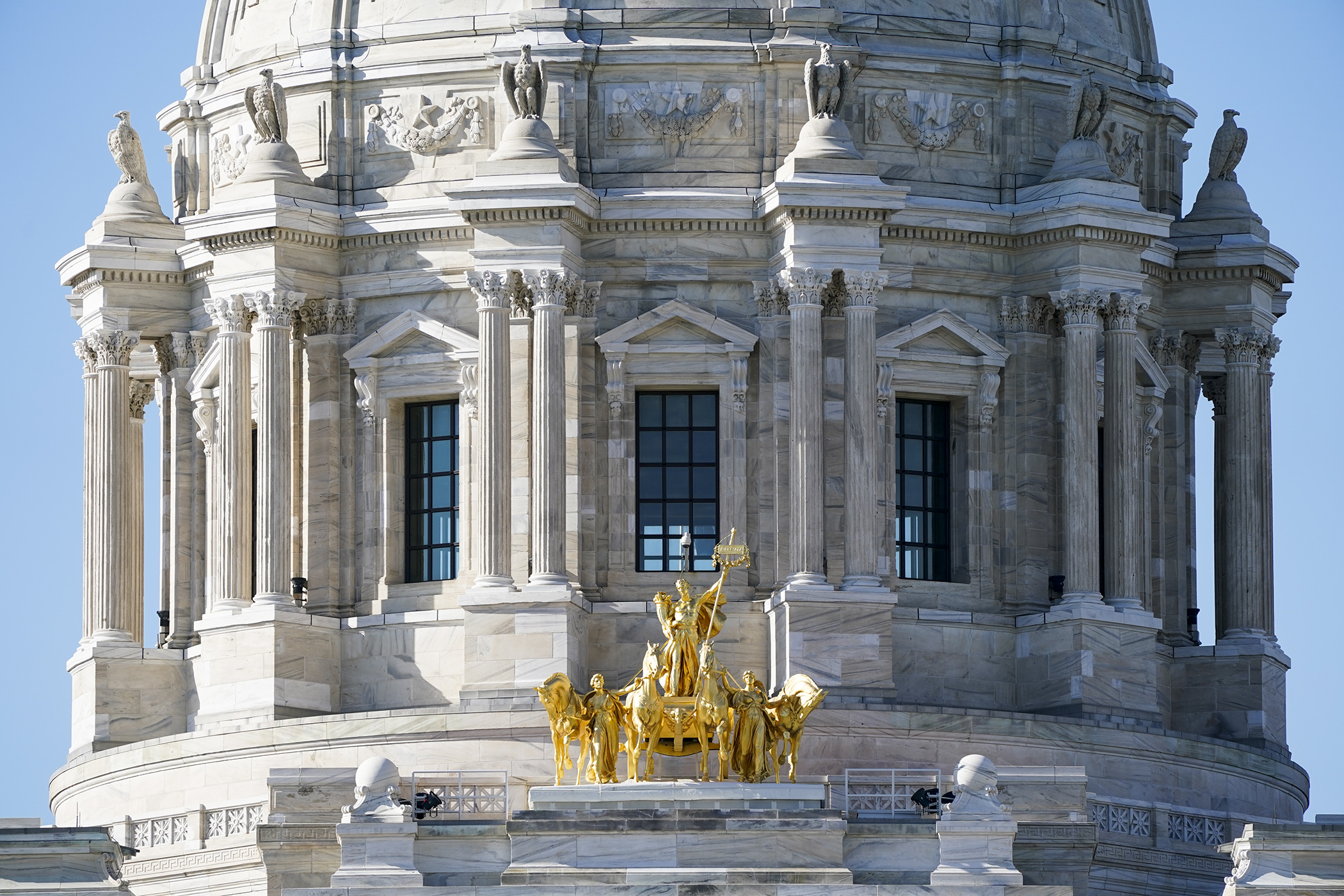
(House Photography file photo)
If you’re arrested for driving while impaired — especially if it’s happened more than once — getting back behind the wheel could soon prove more difficult.
Sponsored by Rep. Larry Kraft (DFL-St. Louis Park), HF2130 would alter several requirements for repeat offenders, including increasing the use of ignition interlock systems, a sort of built-in breathalyzer that won’t allow the vehicle to start unless you pass a breath test.
On Thursday, the House passed the bill, as amended, 123-5 and sent it to the Senate.
Kraft said the bill was inspired by an incident last September in which a drunken driver drove onto a St. Louis Park restaurant patio killing two people and injuring nine others. It was revealed that the driver had a blood alcohol content over four times the state’s legal limit and six prior DWI convictions on his criminal record.
https://www.youtube.com/embed/Dhkafx6DhJIMinnesota House passes bill to toughen penalties for repeat DWIs 5/1/25
“From a National Highway Safety Administration study, 43% of those convicted of a DWI in Minnesota were repeat offenders,” Kraft said. “And, according to the [Centers for Disease Control], ignition interlocks reduce repeat DWI offenses by about 70% while installed.”
The bill would specify the time a person must participate in the ignition interlock program before becoming eligible for reinstatement of a standard driver’s license, and allow someone to pay the law’s $680 reinstatement fee for a standard license in installments, rather than in one lump sum.
It would also require someone with one DWI over a 20-year period to use the interlock device for two years, with the required length of time increasing if further offenses happen. The offender would have to use one for six years for two offenses, and for 10 years for three or more. The state’s current maximum is six years for four or more offenses.
Under the bill, license revocation requirements would be consolidated into one section of law. It would maintain the existing revocation requirements for those with no prior incidents, but extend the lookback period for prior offenses from 10 years to 20 years.
“No one should have to worry that their night out could turn deadly because someone with a history of impaired driving was able to keep driving,” said Rep. Jeff Witte (R-Lakeville). “If it saves one life and saves a family from having to go through a situation like this, it’s worth it.”
What Are the Laws for DC DUI Repeat Offenders?
by Scrofano Law PC | Feb 29, 2016 | Second Offenses
A Wisconsin man is currently facing up to 30 years in prison after being convicted of his eighth DUI. In the state of Wisconsin, while a single DUI conviction is usually charged as a misdemeanor, multiple DUIs are charged as felonies which carry significantly higher penalties. Unlike in Wisconsin, however, DUIs within the District of Columbia are never charged as felonies.
As previously discussed, in the District, the Office of the Attorney General (OAG) has jurisdiction over the prosecution of DUIs. The OAG can only prosecute traffic misdemeanors like DUIs, reckless driving, and hit and runs. Conversely, if a person within DC is charged with a felony, the United States Attorney’s Office (USAO) has jurisdiction to prosecute the case. Consequently, the OAG will rarely ever charge a DUI as a felony because it does not want to lose jurisdiction over the case. What this means is that no matter how many DUIs you get within DC, you will only ever be charged with a misdemeanor. So while the Wisconsin man mentioned earlier faces up to 30 years in prison for eight DUI convictions, the most time a person will spend in jail for any DC DUI or DWI is up to 1 year.
DC is one of the toughest jurisdiction on those who get behind the wheel of a car drunk. Whether you’re a first offender or a repeat offender, there are several provisions in the law that trigger mandatory minimum jail time and fines. However, for folks who get 3 or more DUI’s, DC is actually one of the softest. The reason is largely the fact the OAG does not want to cede jurisdiction over repeat offenders. Because the OAG has no jurisdiction to prosecute felonies, no matter how many DUI’s someone gets in DC, the crime remains a misdemeanor.
First time DUI offenders can face up to 180 days in jail and/or $1,000 in fines. In addition, there is a mandatory minimum of 10 to 20 days in jail if a driver has a blood alcohol content (BAC) over .20%. Second time DUI offenders must spend at least 10 days in jail and could face up to 1 year in jail and/or up to $5,000 in fines. If a second offender has a BAC over .20% or they refuse to take a breathalyzer test, the mandatory minimum jail time is 10 to 35 days.
Third time DUI offenders must spent at least 12 days in jail and could face up to 1 year in jail and/or up to $10,000 in fines. If a third time offender has a BAC over .20% or they refuse to take a breathalyzer test, the mandatory minimum jail time is 45 to 75 days in jail plus 30 days mandatory time for each previous offense. Fourth time and repeat DUI offenders must spend at least 45 days in jail plus 30 days mandatory time for each previous offense. A fourth and repeat offender may have to pay up to $10,000 in fines and spend additional mandatory time in jail if their BAC is over .20%.
What DC DUI law boils down to is that while you’ll only face up to 1 year in jail for the misdemeanor charge, the government is going to try its best to make you serve a mandatory minimum sentence. In the unfortunate event that you are arrested for a DUI within the District, it is important that you hire an experienced DUI attorney who can help you avoid as much mandatory jail time as possible. At Scrofano Law PC, we have successfully defended clients against DC DUI convictions.
If you or someone you know has been arrested for a DC DUI, call Scrofano Law PC immediately for a full consultation—and remember: Before you blow, call Joe!
Repeat DUI Offender

Being convicted of Driving Under the Influence has serious consequences. If you are charged with a second, third, or fourth DUI conviction, punishments are even worse. Florida has harsh penalties for repeat DUI offenders, as they threaten other motorists by causing accidents, injuries, and fatalities. Being charged with a second or subsequent DUI conviction is a serious legal matter requiring an experienced and skilled criminal defense attorney to help you preserve your driving privileges. Contact the Kelley Defense Firm to discuss your case.
Consequences of Repeat DUI Convictions
Punishments for DUI convictions become “enhanced” with every new charge. Sentences are also more severe if there was a child in the car with you, you tested with a BAC of more than .15%, or you caused an accident with injuries. Here are the consequences for second and subsequent DUI offenses.
Second Offense
A conviction for a second DUI can make it much more difficult to obtain a hardship license. Hardship licenses allow you to operate a motor vehicle with limited driving privileges if your license is suspended or revoked. You can file for a hardship license if you need to drive for a specific, approved purpose, such as medical appointments, work, or school. Those convicted of a second drunk driving violation within five years can face severe penalties, including increased fines, longer license suspensions, and mandatory jail time. You will have to wait at least one year before you can be considered for a hardship license and being approved for one becomes much more difficult.
Third Offense
A third DUI within ten years will get you labeled as a repeat offender and result in a felony charge. A third DUI conviction could lead to a fine of up to $5,000, a five-year prison sentence, or both. Your license will be revoked for ten years, and you will not be considered for a hardship license for at least two years.
Fourth and Additional Offenses
In some cases, sentencing related to a repeat DUI charge is influenced by the number of years that have passed between each DUI charge. However, fourth offenses do not operate this way. Offenders receive the same punishment for a fourth DUI conviction, regardless of how many years have passed between each charge. Fourth DUI offenses are third-degree felonies and come with fines that could total up to $5,000. You could also have your license revoked for at least ten years—or permanently in some cases.
Get Strong Defense Representation from an Experienced Florida Attorney
Building a solid defense for a repeat DUI/DWI offense is crucial to avoid fines, incarceration, and loss of driving privileges. We ensure the initial traffic stop was valid and that no mistakes were made during the field sobriety or blood alcohol level testing. We seek to suppress any evidence based on inaccurate test results. If your rights were not respected throughout the process, we ask for the immediate dismissal of the charges. We will negotiate with the prosecutor and work to have the charge reduced whenever possible. We fight for your rights to attempt to lessen these life-long impacts of driving under the influence.
Call A Kissimmee Drunk Driving Defense Lawyer
Repeat DUI offender defense lawyer Richard Nick Kelley has represented clients in a wide variety of repeat drunk driving cases. The Kelley Defense Firm understands what is at stake in these matters, and you can count on us to do everything we can to help you avoid a conviction and the devastating penalties that come with it. Contact Richard Nick Kelley, P.A., at 407-553-5327 today for a free consultation about your repeat DUI/DWI offender case. You can reach a member of our firm 24 hours a day, seven days a week.