



Officers involved in the arrest of 73-year-old Karen Garner violated key Loveland Police Department policies, report finds
The officers involved in the arrest of Karen Garner in 2020 violated Loveland Police Department policies on use of force, compliments and complaints, as well as the chain of command and ethics. Those were the findings of an independent report by a national auditing firm released by the city of Loveland on Friday.
City Manager Steve Adams called Friday a milestone day for the city as it takes accountability for the police department’s role in the arrest of a then-73-year-old Garner, who has dementia.
“First and foremost, the Loveland Police Department, as well as the City of Loveland organization, are sorry for what happened to Karen Garner,” Adams said during Friday’s press conference. “We sincerely regret that this incident ever occurred and that officers in our department were responsible for how Ms. Garner was treated that day.
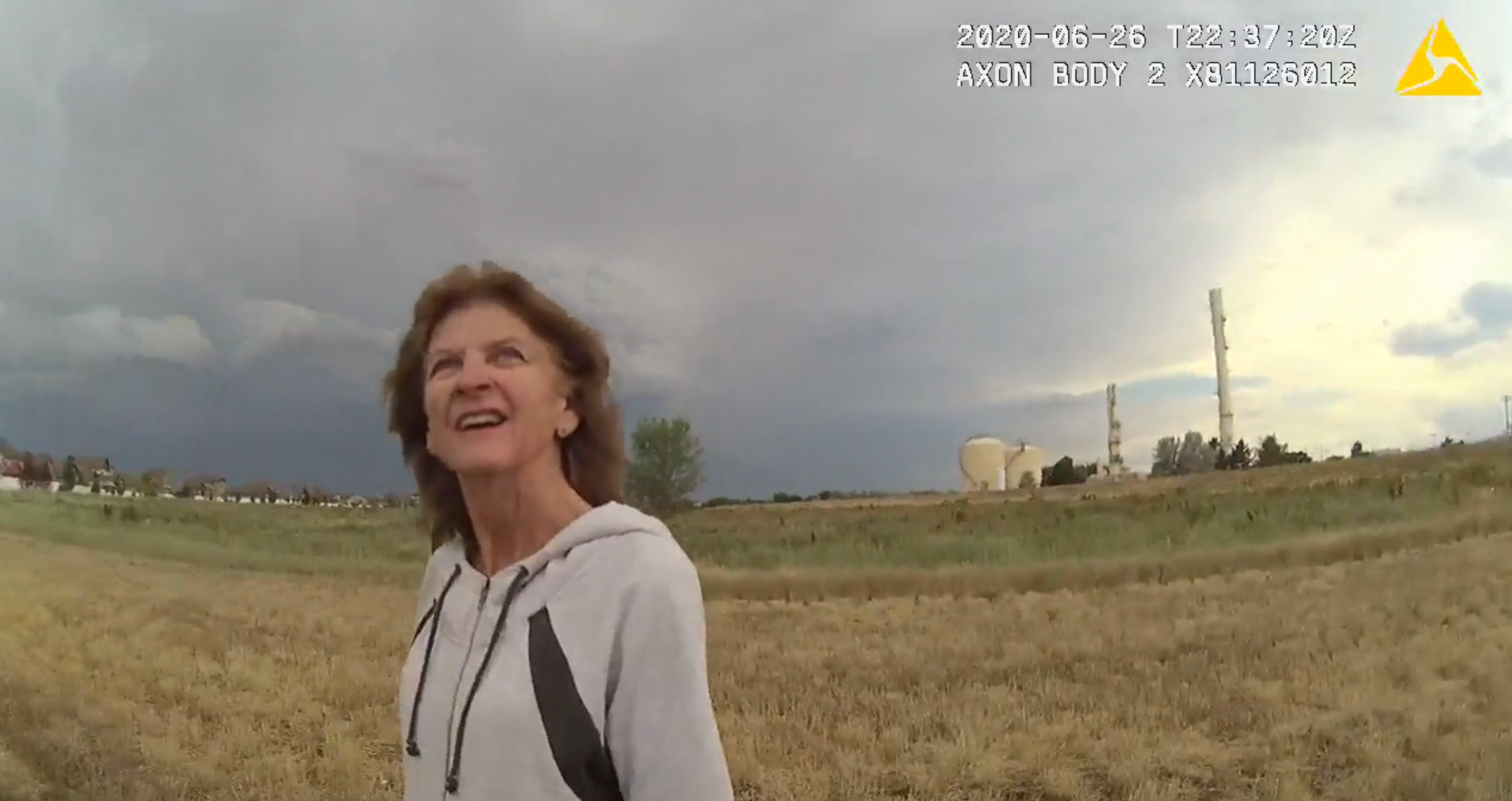
The audit focused on staff and police officers who handled the case within the Police Department, not the two officers who were criminally charged and convicted, and detailed a series of policy violations and failings.
Those include the actions of a sergeant who was also on the scene of the arrest, as well as a lieutenant and assistant chief who signed off on a report that claimed Garner’s injuries were a result of her struggling against handcuffs in the booking area of the police station.
According to the report, both the arrest and the subsequent cover-up of when and how Garner was injured and what exactly happened at the scene reverberated through the department and involved about half a dozen other officers.
The report revealed Sgt. Philip Metzler changed the case number of his body-camera footage weeks after the arrest. That footage showed a bystander who witnessed Garner’s arrest and complained about the use of force on an elderly woman.
Metzler essentially removed the footage from the Garner case file — effectively hiding a piece of evidence. He also reclassified it as an “incident” rather than a case, which means that the footage would have been deleted in one year as opposed to 10 years. A department employee discovered the change and saved the files. Metzler is no longer with the police department.
On June 26, 2020, Garner was stopped by Officer Austin Hopp and Officer Daria Jalali after she left a local Walmart without paying $13.88 for several items, according to a lawsuit filed by Garner’s family against the city and police, which was settled for $3 million. Walmart employees retrieved the items but did not let Garner pay for them and called the police.
As she walked home, Hopp stopped her. When she turned away from him and indicated she did not understand him, he grabbed her and pushed her to the ground, twisted her arm around her back and handcuffed her. Garner’s shoulder was dislocated and her arm was broken during the arrest.
Hopp and Jalali, neither of whom are still with the police department, were both charged and convicted for their actions that day. Hopp is serving a five-year prison sentence. Jalali completed her 45-day sentence and is now serving her three years of probation.
Because their actions were handled by criminal courts, they were not part of the audit, which focused on the department’s handling of the case
Adams said on Friday that the report represents a partial conclusion to the incident, but that improvements continue
“I’m here to tell you that we are committed to having continuous improvement in our organization. It started the day after things happened and we found out, and it has not stopped and will not stop,” Adams said.
He said a separate review by the auditing firm, Jensen and Hughes, offered recommendations for the police department.
“It highlights a number of areas of improvement that we can do to change policies, operational procedures — how we communicate to the public, how we tell the public what’s going on and how they can make complaints and concerns to us known and how we can respond,” he said. “That is part of our commitment to the community to help with these things as we implement them and move forward again with more transparency and accountability.”
Last year, Garner’s family told CPR News that the day of her violent arrest has changed her completely.
“She doesn’t smile, since then, she just is so overwhelmed,” said Shannon Steward, Garner’s daughter-in-law. “We’ve talked to her caretakers about PTSD from all of this, and it has truly changed the progression of how her dementia was going.”
CPR reporter Claire Cleveland contributed to this report
Squatter call takes twist when cops clash with wrong man: lawsuit
78-year-old Utah resident left bloodied by police investigating claims of squatter activity
Squatter call takes a twist when cops clash with wrong man: lawsuit
An elderly Utah man who was left bloodied and bruised by police officers during their response to a call of squatter activity has filed a lawsuit against the department for excessive use of force. Credit: Ogden PD / Sykes McAllister Law Offices
An elderly Utah man who was left bloodied and bruised by police officers during their response to a call of squatter activity has filed a lawsuit against the department for excessive use of force.
“I never had a bit of control. I was at his mercy, completely. It was quite a blur. It happened, and all of a sudden I was down on the ground tasting my blood,” Utah homeowner Rand Briem said last week of the incident, according to KSL News.
Briem and his wife, Vera, were pulling out of the driveway to run an errand last November when they were met by officers from the Ogden Police Department. Rand Briem was 78 years old at the time of the incident and his wife was 74.
The officers were responding to the home in Ogden over reports of potential squatter activity, according to the lawsuit. A neighbor reportedly complained that someone was living in a home that was foreclosed.
BODYCAM FOOTAGE SHOWS POLICE FATALLY SHOOT ARMED HOMEOWNER AFTER RESPONDING TO WRONG HOUSE

Rand Briem reportedly sustained these injuries during his arrest last November. (Sykes McAllister Law Offices)

The lawsuit states that the Health Department posted a non-occupancy sign for the home’s basement over a chemical contamination issue. The notice only applied to the basement, and the Briems were living in their home’s detached garage at the time of the incident.
“There was a health department placard regarding nonoccupancy of the ‘basement’ apartment on the front door of the main residence,” the lawsuit states, adding that the Briems “had been in the detached garage living area just prior to the incident.”
Law firm Sykes McAllister, which is representing the Briems’ court case, provided Fox News Digital with police bodycam footage of the scene, which shows officers approaching the elderly couple and inquiring if they live at the residence.
SQUATTER DRESSED IN OWNER’S CLOTHES RAIDED FRIDGE IN RITZY BEACH HOUSE: POLICE
“Is this your residence?” one of the officers asks, according to the video footage.
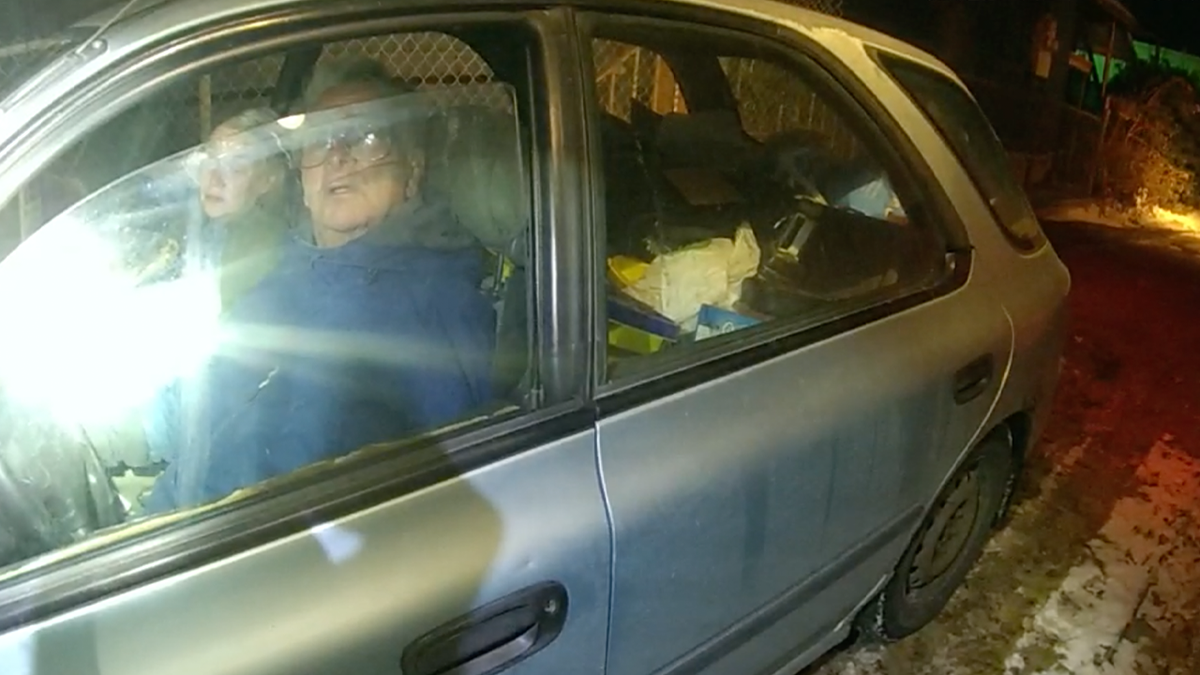
Rand Briem and his wife are shown in their car as Ogden police approach them. (Ogden Police Department / Sykes McAllister Law Offices)
“Yeah, that’s my house, that’s my garage,” Rand Briem responds while sitting in the car with his wife. “What are you doing?”
The officer tells the couple that the property is foreclosed and they “should not be here.”
“Yeah, that’s my house, that’s my garage, my house isn’t foreclosed on,” he says, explaining the non-occupancy sign only applies to the basement.
Briem attempts to drive off, and the officer demands he turn his car off so that they can “get this settled.” Briem then becomes visibly irritated by the interaction on his property.
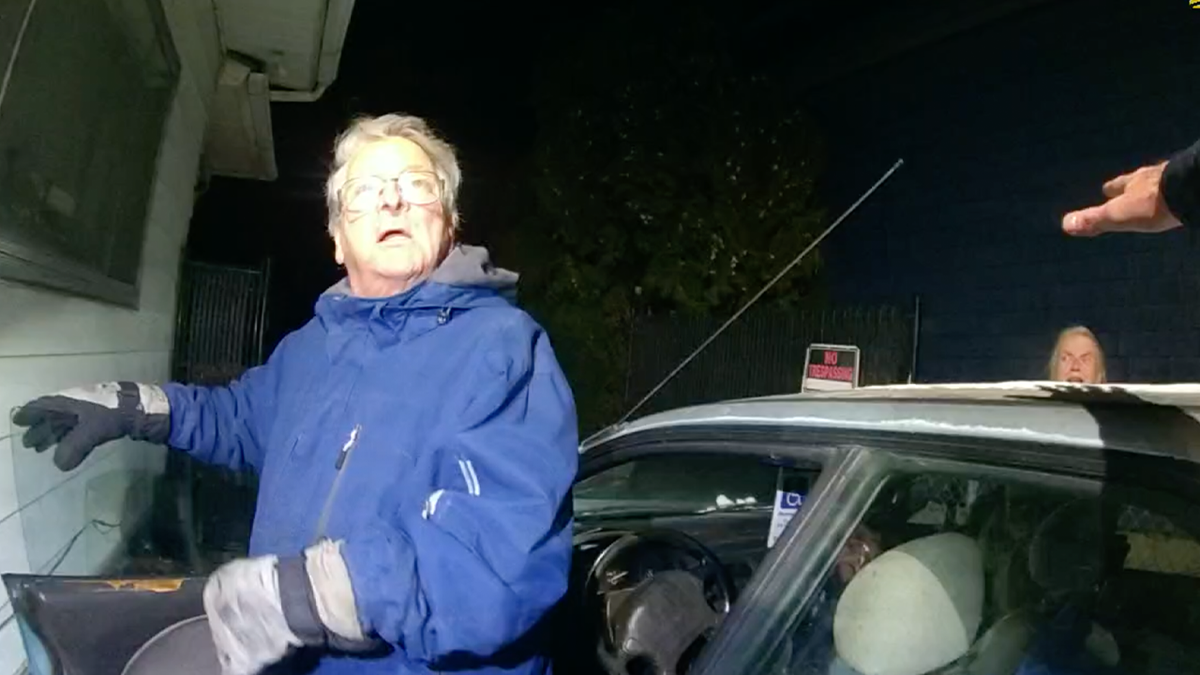
Rand Briem gets out of his car as police question if he is the legal resident of his home. (Ogden Police Department / Sykes McAllister Law Offices)
“Now, what’s with you?” Briem says after getting out of the car. “… What is this? What investigation, for hell’s sake, you dumb s—.”
Briem tells the officers he will prove he is the legal resident of the property by showing them his driver’s license, noting he “will not give it to” the officers. His wife also gets out of the car and tells officers that Briem is “ill.”
The first officer takes Briem’s driver’s license out of his hands, sparking a confrontation between the two.
“After one to two seconds, the officers forcefully took Mr. Briem to the ground of his driveway for no apparent reason,” the lawsuit alleges.
COLORADO POLICE FACE LAWSUIT OVER ALLEGED COVER-UP AFTER WOMAN SHOCKED WITH TASER FILES COMPLAINT
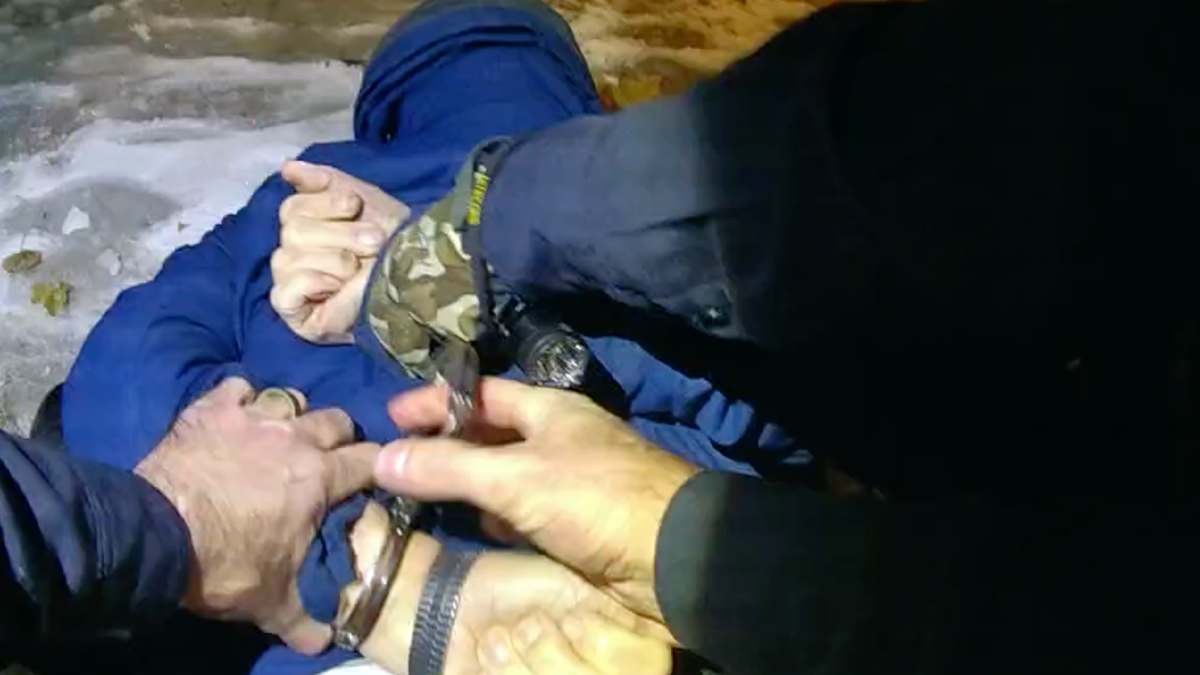
Ogden police handcuff Rand Briem as he lies on the ground. (Ogden Police Department / Sykes McAllister Law Offices)
The bodycam footage shows the officers attempting to arrest Briem as his wife screams that “he is ill.” Briem is ultimately handcuffed while lying face down on the ground.
“Don’t grab me,” officers are heard telling Briem. The lawsuit, however, argues Briem was not grabbing the officers.
After he was handcuffed, officers seated Briem on the porch of the home and then inspected his driver’s license, the footage shows. The officers are heard telling the man that he should have identified himself sooner and instead wanted “to fight.”

Rand Briem’s face is bloodied after he was put in handcuffs by police. (Ogden Police Department / Sykes McAllister Law Offices)
“We need to make sure you’re all right. That was a pretty hard fall that you took,” an officer tells Briem, informing him that paramedics were on their way to check out his injuries.
“I would be all right if you hadn’t thrown me down on the ground,” Briem replies.
“All you had to do was comply with what we were asking,” the officer tells him.
“I’m a 78-year-old man, and you guys had to throw me down … on the pavement and bust my head open.”
SQUATTER ‘FROM HELL’ RAVAGES SWANKY LA HOME WITH MESS, STENCH IN 570-DAY STANDOFF: HOMEOWNER
“Well, that’s what happens when you try to grab me,” the officer says.
“I didn’t try to grab you,” Briem shouts back. “I wasn’t trying to grab you.”

Rand Briem sits on his porch after police put him in handcuffs. (Ogden Police Department / Sykes McAllister Law Offices)
Briem’s rotator cuff was torn during his arrest, and he was left with some bruising, cuts and emotional distress. The couple filed their lawsuit in U.S. District Court against the Ogden Police Department and the two arresting officers, arguing that their constitutional rights were violated over the arrest. The suit argued that Vera Briem suffers from post-traumatic stress disorder due to the incident.
The couple’s attorney, Robert Sykes, said at a press conference last week that arguing the incident should never have led to a forceful arrest, even if Briem was rude to the officers.
“No force is appropriate if no force is needed,” Sykes said last Thursday, ABC 4 reported. “There was no force needed that night.”
SQUATTERS TURNING FLORIDA NEIGHBORHOOD INTO ‘NIGHTMARE’ AS COPS LEFT ‘HANDCUFFED’: REPORT
“The law is universally clear on this,” he said. “Rudeness does not justify excessive force.”
Briem was ultimately charged with interfering with an arresting officer, according to the Ogden Police Department. His case is still pending in court.
“The Ogden Police Department is aware of a complaint filed by Attorney Bob Sykes. The complaint is in regards to Ogden Police case 22G85110 which occurred on November 29th, 2022,” the police department said in a statement last week. “… A complete After Action Use of Force review was completed in November of 2022. There is complete Body Worn Camera footage of the interaction which was reviewed by the [officers’] chain of command as part of our After Action Review process. The Ogden Police Department is confident that the court will find our [officers’] use of force justified as our internal review did.”
CLICK HERE TO GET THE FOX NEWS APP
The Briems’ lawsuit against the department does not specify a dollar amount they are seeking in damages, instead, they are asking for “general compensatory, special, and punitive damages.”
As Police Arrest More Seniors, Those With Dementia Face Deadly Consequences
Many cities are changing how they respond to mental health calls, but less attention has been paid to the unique risks for people with Alzheimer’s and other brain diseases.
El Paso Police used a stun gun on 70-year-old Armando Navejas, who had dementia, in October 2021. His daughter, Debbie Navejas Aguilar, keeps mementos of Navejas — who died at a rehabilitation facility in March — including an image of him with his wife Josephine and a cremation pendant. Jimena Peck for The Marshall Project
Additional data reporting by Weihua Li
One night in October 2021, Armando Navejas wandered away from his home in El Paso, Texas. The 70-year-old had Parkinson’s disease and dementia, and his family said he could barely speak. Scared for his safety, his wife Josephine called 911 for help tracking him down.
This article was published in partnership with USA Today.
By 2 a.m., Navejas was back in front of his house, shirtless and ambling around. According to video from a neighbor’s home security camera, an officer approached, shining a flashlight in Navejas’ face. Navejas appeared agitated, picking up a string of wooden blocks and walking toward the cop, who retreated behind a parked car. Navejas threw the wood limply toward the officer; it landed on the windshield.
When Navejas turned away, the officer walked around the vehicle and fired a stun gun at Navejas’ back. His body went rigid. He fell face-first onto the sidewalk.
A neighbor’s home security camera captured Navejas’ encounter with an El Paso police officer. Footage courtesy of Debbie Navejas Aguilar
Navejas arrived in the emergency room that night with “multiple facial fractures” and bleeding around his brain, medical records show. He never came home — he died in a rehabilitation facility in March of unrelated natural causes, according to a death certificate.
The El Paso Police Department deemed the use of force “reasonable and necessary,” a spokesperson said in an email. But Navejas’ daughter, Debbie Navejas Aguilar, is suing two officers and the city for the “extreme physical and psychological injury” to her dad.
Debbie Navejas Aguilar with her father Armando Navejas in El Paso on Thanksgiving in 2020. Photo courtesy of Debbie Navejas Aguilar
“They acted like he had a gun,” she said in an interview. “This is a 70-year-old man who is lost in his own head. I just don’t understand it.”
As the U.S. population ages and more people develop dementia, older people are increasingly running into problems with the police. Any use of force or arrest can be devastating for someone who is already physically and mentally fragile, like Navejas. While many cities are changing how they respond to mental health calls — including whether police should be present at all — less attention has been paid to the unique risks in cases involving people with Alzheimer’s and other brain diseases.
There’s no national count of how many people with dementia are arrested each year. But an analysis of U.S. crime data by The Marshall Project shows that the number of arrests of people over 65 grew by nearly 30% between 2000 and 2020 — at the same time that overall arrests fell by nearly 40%. The number of elder arrests is growing faster than the population is aging. Older Americans are still a small portion of overall arrests — less than 2%.
National data from the Centers for Disease Control and Prevention also estimates that from 2010 to 2020, over 12,000 people 65 and older ended up in a hospital emergency room for injuries caused by police or private security.
Police Arresting More Older People
From 2000 to 2020, arrests of people age 65 and older increased by nearly 30%, while arrests overall declined, according to crime data collected by the FBI. Arrests of older people still represented less than 2% of all arrests in 2020.
Source: Uniform Crime Reporting Program Data: Offenses Known and Clearances by Arrest, compiled by Jacob Kaplan.
Serious cases have come to light across the country, often captured on police body cams. In Loveland, Colorado, in 2020, 73-year-old Karen Garner, who had dementia, was violently arrested for attempting to steal $14 of merchandise from Walmart. The officer who pinned her to the ground and broke her arm was sentenced to five years in prison. In 2021, police in Tulsa, Oklahoma, taunted a 70-year-old woman with late-onset bipolar disorder, before tackling and jailing her.
In Las Cruces, New Mexico, this April, an officer shot and killed 75-year-old Amelia Baca, who had dementia, as she stood holding two large kitchen knives in the doorway of her home. Her family has since settled a $2.75 million lawsuit with the city.
Police are often called to track down people who have gotten lost, arrest confused shoplifters, or intervene in domestic disputes. But many officers may not have adequate training on dementia.
Some older people can still pose a real threat, regardless of age or cognition. But interactions with police can also escalate simply because someone is confused or can’t follow an officer’s instructions. Dementia and Alzheimer’s can make it difficult for people to communicate. That confusion can seem aggressive if the person is overwhelmed or afraid.
“Even handcuffing a person with dementia could be extremely traumatic,” said Eilon Caspi, a gerontologist and dementia behavior specialist at the University of Connecticut. From transport in a police cruiser to interrogation to jailing, any part of an arrest “could really be a terror,” he said.
In Largo, Florida, where more than 1 in 4 residents is 65 years or older, Joel Quattlebaum is the senior services officer for the city police department. While he mainly supports older adults who are victims of crime, he gets sent to a wide range of calls involving older residents.
“Nowadays law enforcement is used as a social resource,” Quattlebaum said, while a call for a welfare check on a woman in crisis rang out from his police radio. He is certified through the National Council for Certified Dementia Practitioners, and helps train new recruits. “People just need help out there now. They try and call other places, and they get voicemails or on waitlists that are years long.”
Best practices for dealing with dementia patients — staying calm, patient and flexible — may go against officers’ need for compliance when making an arrest, experts say.
“We know what works best is to talk slowly and calmly, ask simple questions, don’t argue with the person,” said Monica Moreno, a senior director at the Alzheimer’s Association. Along with the U.S. Justice Department, the association has provided online training for over 31,000 emergency responders on how to recognize and respond to people with the disease.
“The techniques are drastically different from what [officers] may be learning in their everyday training,” she said.
That disconnect can have grave consequences. This spring, deputies with the Warren County Sheriff in Front Royal, in northern Virginia, stopped 77-year-old Ralph Ennis for erratic driving. The sheriff’s office said Ennis, who had dementia, initially refused to pull over and follow deputies’ orders. When Ennis got out of the car, body cam footage captured by the Front Royal Police Department (a separate agency) shows a deputy slammed Ennis’ head against the truck while pinning his arms behind his back. A second deputy then tackled Ennis to the ground, hitting the older man’s head on the concrete, according to body cam footage cited in a lawsuit filed by his son. “Please let me up!” Ennis cried out, with two officers on top of him. “Let me go!”
A Front Royal police officer who watched the arrest was shaken by what he’d just seen. “That was fucking unjust and fucking un-fucking-called for,” he’s heard saying in his body camera video. “Jesus Christ.”
Ralph Ennis, who had dementia, was pulled over by Warren County sheriff’s deputies in Virginia in 2022. Deputies slammed Ennis’ head against the truck and tackled him to the ground. Video from Front Royal Police Department
Ennis was hospitalized with a massive brain bleed and died two weeks later. (A medical examiner deemed he died of natural causes.) The lawsuit by Ennis’ son, filed in August against the two deputies, claims they used excessive force that caused his father’s death. In court filings, both officers denied any wrongdoing.
Chief Deputy Jeffrey Driskill with the Warren County Sheriff’s Department said in an email he could not comment on the case, given the pending lawsuit and criminal investigation, but confirmed one of the officers involved is no longer with the department. A Virginia prosecutor is still reviewing the case.
All officers in Virginia receive basic training in “communicating with persons with cognitive impairments,” Driskill wrote. “Our agency prides itself in being proactive in dealing with the elderly.”
Navejas was living with his wife in Austin, Texas, when it became clear that his mind was deteriorating, his daughter said. He started leaving ice cream in the fridge or throwing away the trash can along with the bag. His walk turned to a shuffle, and he lost weight. Bright lights and loud noises overwhelmed him. His voice thinned until it all but disappeared, leaving him with nothing but hand gestures and his distinct laugh. The couple decided to move back to El Paso, Navejas’ hometown, to be closer to family.
Armando Navejas with his wife Josephine, in 2018. Photo courtesy of Debbie Navejas Aguilar
He began leaving home, waiting until Josephine was in the bathroom to slip out the backdoor. Josephine, who had glaucoma and used a wheelchair, had to call 911 for help, as she could not drive at night or travel without a car. His daughter said officers would find Navejas walking in a nearby apartment complex or sitting on the curb at a gas station down the street, and simply bring him back.
El Paso Police say their officer was responding to “a call of an assault” the night of the tasing. Josephine Navejas told local reporters and her attorney that she called 911 over a missing person, and that she alerted the dispatcher that her husband had dementia and Parkinson’s. The department has refused to release the 911 call from that October night or the body cam footage from officers on the scene, saying it would interfere with an “open case.”
The officer who used a stun gun on Navejas had been with the force less than three years, records show, and had received training on crisis intervention and dealing with people who have a mental impairment.
The department launched a Crisis Intervention Team in 2019, pairing officers with a licensed clinician to respond to mental health calls. When the local Fox TV station asked why police didn’t send a crisis unit to the Navejas’ house that night, the department responded, “Dementia is not considered a mental health issue that CIT would respond to.”
In an email to The Marshall Project, department spokesperson Sgt. Enrique Carrillo said the crisis team wasn’t sent that night because the “first available unit” is sent to calls “of violence.”
El Paso Police, like many departments, doesn’t have a specific policy for calls involving dementia. But according to their policy on mental health calls, officers are supposed to approach people “in an unhurried, deliberate, calm, and friendly manner” and guide them to a “safe and quiet area.” When deciding what level of force, if any, to use, they should consider the threat posed by the individual, the risk of injury, and the person’s “age, size, [and] relative strength.”
Carrillo said force was needed to control the situation, after Navejas threw something toward the officer. “The officer opted for a less lethal use of force to mitigate the risk of injury to himself and to the offender assaulting him,” Carrillo wrote. “The use of force in any case is never a pleasant experience for anyone involved, unfortunately at times it becomes necessary.”
Police often encounter people living with dementia when other support systems have failed, especially as public budgets for aging and social services dwindle. Some walk away from home when caregivers aren’t watching. And the number of people over 65 who are homeless — a group that is a frequent target of police stops — is expected to nearly triple in the next decade. Officers may also be called into nursing homes or assisted living facilities when employees are overwhelmed or lack sufficient training. In a recent survey by the American Health Care Association, 98% of nursing home providers reported they were understaffed, which can make it harder to diffuse conflicts between residents.
Records from multiple police departments show these nursing home incidents can easily escalate. In Columbus, Ohio, in 2020, police pepper-sprayed a 97-year-old man with dementia in the face and pinned him to the ground. He had failed to comply with orders to drop a pair of small scissors that officers said threatened his wife, according to a police report. The man only spoke Mandarin Chinese. In another incident in Columbus in 2018, police were called to help with an 84-year-old woman with Alzheimer’s who was agitated and hitting staff and other residents; she ended up handcuffed so tightly her wrist bled, and she was put on a psychiatric hold, a police report shows.
In an email, a spokesperson for the Columbus Police Department would not comment on specific cases, but said the department provides regular training on use of force and interacting with people with dementia, autism, and other conditions.
Police are called to nursing homes “more often than we think,” said Caspi, the gerontologist. The first responder needs “to be the one who creates calm, and reassures the person. Can we create a model where there is a designated social worker each time an officer goes to a nursing home, who can create the conditions for this to go well?”
Some cities are trying to do just that, and questioning whether armed police are the right people to send to calls of people in mental distress. A growing number of communities have launched crisis response programs to handle nonviolent 911 calls involving mental illness or cognitive impairment. The teams, often made up of paramedics and counselors, have more time to spend on each call, are specially trained in navigating crises, and can connect people with social services for more long-term support.
Tianna Audet leads the Community Assistance and Life Liaison program in St. Petersburg, Florida, which launched last year. So far, 17% of their clients have been 65 years or older, including two 100-year-olds, several 99-year-olds and a handful of nursing home calls. The team is dispatched to “non-criminal” calls, but are also called in as backup when officers decide the crisis team would be a better response.
“Officers go with a gun and a badge and handcuffs,” Audet said. “They just weren’t trained to be social workers. We’re filling the gap where they don’t have the training or the time.”
Debbie Navejas Aguilar in her Denver, Colorado, apartment in October. She is suing two El Paso police officers and the city for “extreme physical and psychological injury” to her father. City attorneys deny the allegations. Jimena Peck for The Marshall Project
For the Navejas family, life got even harder after his run-in with police. A month after he was hospitalized, his wife fell while at home alone and broke both of her hips and a knee. She was hospitalized and died in February of liver cancer, on the opposite end of the same nursing home hallway from her husband, their daughter said. Armando died just six weeks later.
Aguilar filed a lawsuit in June, seeking monetary damages and claiming that her father’s death was largely due to his injuries from being shocked with a stun gun. Aguilar said what she really wants is an apology — something a settlement likely won’t give her. In their response to the lawsuit, city attorneys denied that excessive force was used.
“It’s been a nightmare,” Aguilar said. “If I was there, I could have spoken for him, or been there for my mom. It just repeats in my head all the time. This did not have to happen.”