

Killer High: Exploring the Phenomenon of LSD-Fuelled Murder
At around 6:30PM on the night of January 14, 2018, two hours after he’d swallowed five gel tabs of high-powered LSD and less than half an hour before police kicked in the door and restrained him, Jordan Ledbetter opened fire on a group of his closest friends, spraying them with foam darts from a NERF gun.
This was not unusual. Jordan, along with his friends Jesse, Darren, Doja, Isaac, Dakota and Garrett, were live-action role playing gamers, or Larpers: people who dress up as fictional characters and act out imaginative fantasies, for fun.
As Jordan strutted around the apartment brandishing the weapon, leering in people’s faces and growling “What’s your worth? Are you with me?”, it seemed obvious that he was acting. The 24-year-old, who studied drama at the local performing arts academy in Springfield, Oregon, would later tell police that he remembered thinking he was The Punisher, Marvel Comics’ psychologically-tortured antihero.
“We’re all just a bunch of crazy nerdy kids, you know? Playing video games, Larping, playing Dungeons & Dragons—just having good times.” That’s how Dakota, who was 21 at that point, explains it to VICE News over the phone. “And Jordan was quite the nerdy kid. No one, not a single person, thought he was ever capable of this.”

Dakota was also high on acid at the time, along with Garrett, his older brother, who he’d invited along to the party. The other four were tripsitters.
“We had a pretty good environment that night,” he says. “Everything was fine; everyone was laughing. But the acid hit us really quick. This was probably some of the strongest acid I have ever had, and it hit hard.”
According to police interviews conducted several hours later, Jordan noticed he was getting particularly high and decided to put the toy guns away. The last thing he would remember in the morning was taking a shot of spiced rum and a dab of marijuana.
Dakota was feeling it too.
“I remember having to sit on the couch; I was just so out of it,” he says. “I was sitting there staring at the pretty colours of this video game, like oh my god, this is so beautiful. And then I remember someone yelled ‘Oh my God, he’s got a gun’—and that’s what kind of got my attention.”
Jordan had gone to the bathroom and come back holding a Hi-Point nine-millimeter handgun. A shot shattered the air.
In the past three years there have been at least 11 reported incidents of somebody killing another person while high on LSD. In most cases it was the killers themselves who told authorities they’d been under the influence of acid—some having taken it for the first time, some ingesting a higher-than-usual dose, and some combining it with other substances like weed, or alcohol, or both.
Many of the accounts echo one another, not only in the brutal details of the homicides but also in the various shades of dumbfounded shock felt by those who knew the killers. Anecdotally, most of the offenders seemed like ordinary, level headed people before taking the drug.
With LSD use on the rise, and as conversation around the potential loosening of prohibitions on psychedelics continues to gain traction, such horror stories strike at the heart of a growing public fear: namely, can acid drive a person to kill?
In short: maybe.
“I remember hearing a loud bang and then I remember hearing Jesse yell, ‘you just shot me, you just shot your best friend’,” Dakota recalls. “And that’s when it just snapped in my head: Oh my god, I gotta get out of here. I wasn’t high anymore. The first thing I grabbed was my phone, and then a second shot went off, and I was trying to dial 911 at this point, but then a third. And as the third shot went off I put my phone back in my pocket and I walked into the kitchen, which led to the front door.”
Standing in the kitchen was Jordan, who fired off two more shots as Darren was running out the door. Dakota got behind his friend and desperately tried to restrain him, eventually taking him down to the floor and putting all of his weight on top of him.
“I kept yelling at him, like ‘Jordan, calm down! You’re fine! You’re okay!’ He kept trying to bite me and kept saying things like ‘is this what it’s like to lose everything?’”
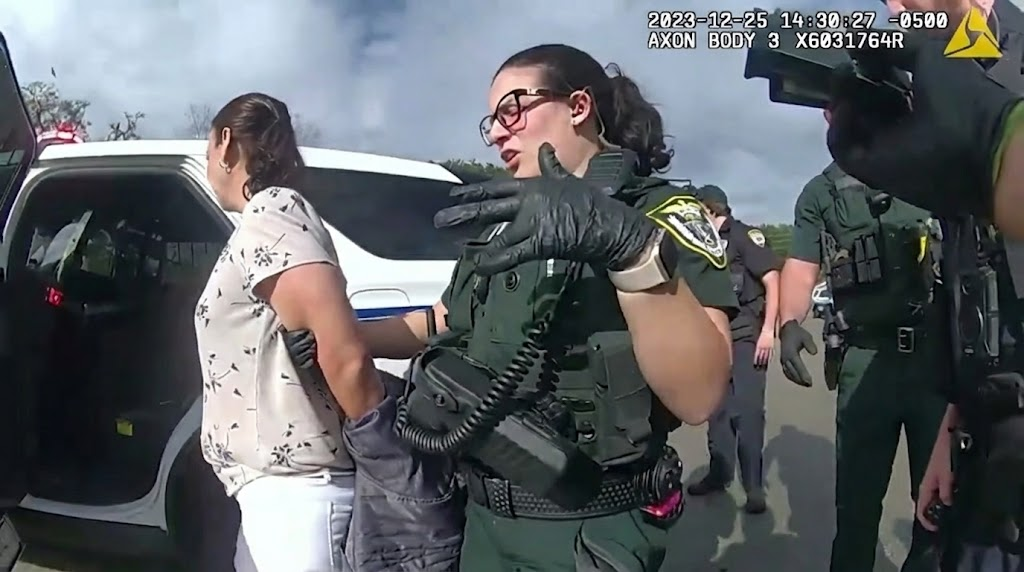
The police arrived, and as they did Jordan headbutted Dakota, kicked him in the groin and wriggled out from under him—seconds before three armed officers burst into the apartment and pinned him to the wall with a riot shield.
“Then I got handcuffed, and Jordan was taken downstairs by like five or six cops—the entire time reaching for the cop’s gun, for the taser, everything. He was very combative. And all I remember is looking down at the floor as the cop flips me over, and just seeing the puddles of blood that they’re rolling me over in. And the first thing I thought was Oh God, who’s hurt? What’s going on?”
Over the course of the next few hours the pieces were put into place. Jesse had been shot in the arm, with no major injuries. Darren had been shot through the throat, the bullet just missing both his spinal cord and his carotid artery—a miraculous survival. And then there was the third victim.
Garrett had taken one bullet to his chest and another to his lower torso. Hours later he was pronounced dead.
Collating the many incidents of “LSD-induced homicide” that have been detailed in police reports, court documents and news articles in recent years paints an unnerving picture.
In October 2018, nine months after Jordan’s shooting rampage, a 22-year-old in Florida took acid with his girlfriend and ended up stabbing her father to death. In March 2019, a teenager in Australia ingested two tabs of LSD and killed an 82-year-old stranger by stomping on his head. A month later, a man in New York State took acid and carried his eight-month-old daughter through a cemetery in the middle of the night, throwing her into a waist-deep pond that he thought was “the fountain of youth”.
Between January and September 2020, at least seven more people were killed under eerily similar circumstances: each of them a friend, girlfriend, parent or grandparent of someone who was allegedly tripping on acid when they slipped into a murderous rage. And yet, importantly, none of these reports mention whether the acid was actually verified in a lab, nor whether toxicology tests found acid in the culprit’s system. These are significant details, given that such violent reactions don’t quite jibe with our contemporary scientific understandings of LSD.
“There are a few reported cases where delusions initiated by psychedelics seem to have led to homicide, because the user feels paranoid and threatened or because they project malign intent to the victim,” Professor David Nutt, neuropsychopharmacologist at the Imperial College in London and chairman of Drug Science, tells VICE News. “[But] in regards to the general notion that LSD causes violence, it may be worth noting that one study found males who had used LSD or psilocybin were less likely to perpetrate violence against their current partners.”
As far as the scientific literature is concerned, aggression is not considered a common response to LSD. But bad trips can manifest in any number of ways.
Data from the 2019 Global Drug Survey (GDS), provided by Dr Monica Barratt at Melbourne’s RMIT University, indicates that a little over one percent of people who reported taking LSD in the past year sought emergency medical treatment as a result. The most commonly cited reasons were panic, confusion, paranoia, hallucinations, extreme agitation, memory loss and trauma. About 15.1 percent of these respondents, however, noted feelings of “aggression/violence”.
That’s nothing to be sneezed at. If we apply the same ratio to the estimated 2.6 million Americans who reported using acid during the year ending 2018, it equates to 26,000 people seeking emergency medical treatment as a result and almost 4,000 citing aggressive or violent reactions to the drug. Viewed through that lens, LSD’s growing reputation as a substance of learning, healing and spiritual transcendentalism seems to show cracks.
But the reality is not so black and white.
For one, data included in the GDS is based on self-reported accounts from users, meaning it’s almost impossible to know all the factors at play. To assume that acid alone “caused” these negative emotions, or drove any of the aforementioned killers to act upon them, is to ignore the many complex circumstances that influence how certain individuals respond to psychoactive substances.
It’s hard not to read into the anecdotal evidence from police reports, court documents, news articles and surveys and feel at least somewhat drawn towards a tantalising conclusion: that LSD does in fact make people more likely to act in violent and potentially homicidal ways. But there’s more to the story than just that.
The major things to consider when examining whether LSD turns ordinary people into bloodthirsty murderers can broadly be boiled down to four factors: substance, dose, set and setting.
For starters, there’s the possibility that the killer in question was mixing the acid with other drugs, or that they thought they were taking LSD when in fact they were taking something else, like N-benzyl Methoxy (NBOMe): a common black market alternative that can cause people to behave in uncharacteristically violent ways. An NBOMe trip is anecdotally described as intense and distressing, inducing feelings of confusion, nausea, paranoia, and aggression—and one symptom of an NBOMe overdose is psychosis.
Another factor is the intensity of the dose. Bigger hits of LSD are more likely to disrupt an individual’s sense of reality, which could in turn induce more powerful paranoia and hallucinations, reduce one’s sense of self and “make the person more likely to engage in unplanned aggressive behaviour”, according to Professor Nutt.
In 2016, a team of researchers explored this phenomenon and noted that while at lower doses LSD and other hallucinogenic drugs activate the serotonin receptors in the brain—likely producing the much lauded therapeutic effects for depression, drug dependence, and anxiety—“it is clear that at high doses they activate the dopaminergic system, producing psychosis and similar effects”.
“Set” refers to a person’s mindset when they start their psychedelic journey, and is commonly touted as one of the main determinants of whether someone is likely to have a good or bad trip. Emotional distress can have a significant impact on the stability of one’s journey—but in cases of acid-induced murder, there’s also the possibility that the individual harboured homicidal tendencies before taking the LSD.
“Psychedelics have been shown to intensify emotions and, in some cases, make individuals more sure of their own convictions,” Professor Nutt explains. “It is possible, then, that the individuals involved in these episodes have had homicidal thoughts before taking the drug, but these feelings became intensified while they were under the influence.”
The final factor, setting, refers to the physical environment in which the user finds themselves when the drugs kick in. Some settings increase the risk of a bad trip, like the presence of strangers, while others increase the risk of something bad happening in general, like environmental hazards.
Any of these primary factors could reasonably explain why certain people, in certain circumstances, have psychopathic reactions to acid. Collectively, they also go some way towards debunking the idea that LSD alone can turn someone into a homicidal maniac.
But beyond these broad guiding principles, the bottom line is that we still don’t really know what’s happening in the brain when someone has a traumatic psychedelic experience—or how to completely eliminate the risk. LSD is so unpredictable, its potential psychic avenues so manifold and various, that any attempt to fully understand what might send a person down one rabbit hole rather than another inevitably unravels into speculation. As forensic psychiatrist Brian Holoyda puts it, “it just depends on what the person was experiencing.”
“People have experienced tremendous things on these compounds, ranging from the experience of meeting otherworldly beings and feeling like they’re in contact with God, to the experience that they’re burning alive in hell for six hours—so I wouldn’t count anything out if someone is intoxicated on enough LSD,” Dr Holoyda tells VICE News. “The concern I have is that LSD, even in the best of set and setting, can produce bad trips because it’s so unpredictable.”
Regardless of what ends up triggering these episodes, the fact remains: simply by placing tabs of blotter paper under their tongues, a handful of unsuspecting drug users are setting in motion a sequence of events that ends at least one life and destroys countless others. Calamity, it seems, is only ever one bad trip away—and according to Dr Holoyda, a bad trip can happen to anybody.
“I had taken acid with Jordan once before and he was pretty cool,” says Dakota. “Going over to his house, I would never have thought that he had been capable of murder.”
No one thought David Miner was capable of it either. The 19-year-old was living in the quaint Mid-Atlantic town of Frederick, Maryland when he took LSD one Sunday afternoon and went for a drive with his sisters. He was still high by the time he got home and, together with his mother, started playing with the family dog in the living room.
David would later tell police that at some point during this seemingly wholesome activity he was overcome with an urge to kill the dog. He walked into the kitchen, drew a knife from the butcher’s block near the sink and walked back towards the living room—whereupon his mother, realising his intentions, stopped him and took the blade away. When he returned to the kitchen to get another knife she followed him, and this time as she tried to take the weapon off him he stabbed her once in the neck. It was 7PM, five hours into his trip.
David’s father was in the backyard when he heard his wife yelling and, upon finding her collapsed in a chair near the back of the house, called the police. The 911 call-taker could hear David in the background, repeatedly telling his father “I killed mom”. He was later charged with first- and second-degree murder, first-degree assault, three counts of second-degree assault and a single count of resisting or interfering with arrest.
Nate Rodriguez knew David, though he hasn’t seen him in several years, and describes him as “somebody I would have considered a close friend.”
“He was really nice,” he tells VICE News. “Ten years ago when we met online I noticed he was definitely more intelligent than other 10-year olds. We met through Minecraft, and later we eventually Skyped and talked about things we were into: videogames and music were our common interests. Personality wise he was always humorous and friendly. He told me about his family, and from what I understood they had a really normal and healthy relationship.
“This whole thing has me shocked and confused because it’s just not him,” he adds. “He always seemed normal to me.”
When police searched David’s house they found a syringe filled with an unknown clear liquid, a jar containing an unknown clear liquid, a bag containing magic mushrooms and another bag containing what was believed to be LSD. It’s not known which of these substances David may have ingested, or when—but in the days after the incident, when confessing to the murder of his mother, he told detectives he’d been tripping on acid at the time.
Even if we take that as a given though, and assume that David was high on nothing other than pure LSD, the factors of dose, set and setting are still up for grabs. Maybe he was in a state of emotional distress, or something happened that morning to put him in a fragile mindset. Maybe the dog bit him, or kept barking, or there was unnerving music playing somewhere in the house. Maybe David was experiencing such intense hallucinations that he didn’t know the figure he was stabbing was his mother at all.
The point being that LSD trips are so volatile, so uncertain, that anything could have happened.
“I would liken it to Russian Roulette,” says Dr Holoyda. “You’ll have good experiences on LSD until you don’t. Somebody could have a beautiful experience and then the next day have a horrible experience: it’s that unpredictable.”
Like Professor Nutt, Dr Holoyda is careful not to implicate any direct causal link between LSD and criminal behaviour, and stresses that any media reports implying as much ought to be treated with suspicion. But he also acknowledges that, to some extent, the possibility that people are committing acts of violence, homicide or murder while under the influence of psychedelics is worth taking seriously.
“I would not discount these cases at all,” he says. “I would certainly like to have laboratory-confirmed intoxication to know specifically what substances the person was taking at the time—but I would not minimise the fact that people are reporting that they’re taking these compounds and engaging in really harmful behaviour.”
So if the question is “can acid drive someone to kill”, and the answer is “maybe, if they have a bad enough trip”, where does that leave us? On the one hand we have a growing body of academic literature espousing the therapeutic benefits of LSD and its relatively harmless psychoactive effects; on the other we have a semi-frequent influx of police reports, court documents and news articles describing cases where people have taken acid and descended into a psychopathic frenzy.
If a credible explanation is bad trips, and bad trips can happen to anyone, then how do we reconcile that with the purported benefits of these drugs? Or to put it another way: should we fear the potentially disastrous psychopharmacological effects of LSD?
Yes and no. If we can say anything from all of this, it’s that bad trips in general, and incidents of LSD-induced violence in particular, should not undermine the compelling arguments in favour of loosening prohibitions on psychedelics. On the contrary, if the four factors of substance, dose, set and setting do in fact contribute to people having malevolent reactions to acid, then we ought to feel comforted by the power researchers have to control those variables.
“In clinical research settings, researchers will withhold the drug fromparticipants experiencing high amounts of apprehension or preoccupation,” Professor Nutt explains. “This has resulted in a high degree of safety, with thousands of psychedelic sessions run now in the contemporary era of research with no violent episodes.”
Carefully selecting the patients who enter treatment, excluding individuals with a family history of psychosis, keeping the LSD dose low and not providing outpatient treatment will also be used to diminish risks, he adds—suggesting that the factors of substance, dose, set and setting are of little concern in the context of medical research institutions.
The problem, though, is that this is not the context in which the vast majority of people take acid.
“The medical consensus is that sure, these drugs may be safe, we can reduce risks if we’re going to administer them in a clinical context,” says Dr Holoyda. “But that’s not to say that out in public, using LSD whenever you feel like it, regardless of your mental state and regardless of what’s going on with you at the time or where you are, that that is a safe idea. I don’t think anybody is proposing that.”
For people who are going to use LSD in a recreational context, then, the fear remains. An individual can test their drugs, control their dose, and be ever mindful of set and setting. But beyond this, there’s little any recreational acid user can do to guarantee they won’t have a disastrous psychedelic experience—like Jordan, or David, or any of the other seemingly harmless trippers who lost themselves for just a few hours and came back to reality with blood on their hands.
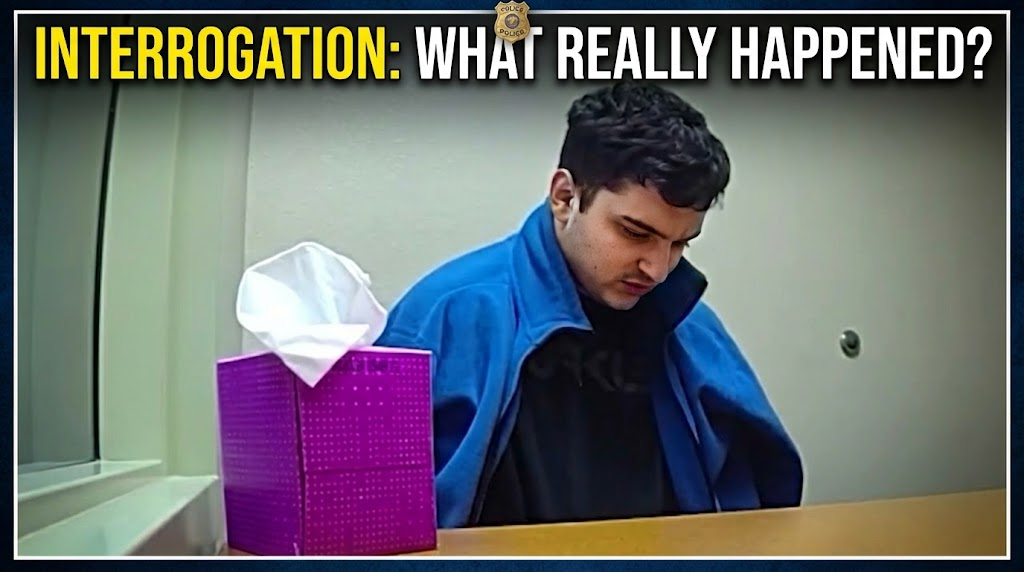
Jordan ended up pleading guilty to first-degree manslaughter, as well as two counts of attempted aggravated murder, and was sentenced to 25 years in jail without the possibility of parole. Police interviews indicate that he doesn’t remember shooting Garrett, Darren or Jesse, and had to be told by one of the investigating detectives that after blacking out he’d killed one of his friends.
Dakota hasn’t seen him since the court date.
“I kind of hate him for what he did,” he says. “Initially I thought he was lying, because the entire thing was he didn’t know what happened. That’s how he got manslaughter instead of murder. But maybe he did pass out; maybe he didn’t know what was going on—I’m conflicted myself.
“If it was just the drugs mixed with some bad emotions and I believed it, that would make it easier to forgive him. But it would all depend on him sitting there in front of me and saying it to my face that he is sorry.”
What Jordan does and doesn’t remember of that night remains unclear, but at least one important detail was confirmed in the course of his trial. In court, a prosecutor said that tests indicated Jordan was “certainly under the influence” of LSD at the time of the shooting.
Dakota, too, is sure of it.
“This wasn’t fake acid, it was real acid,” he says. “I had some leftover, and I have to admit I did try it again after the event. Mainly to see what Jordan felt during the time of the shooting.”
When he got home from Garrett’s funeral, Dakota sat down on his bed and dug out several tabs of the very same LSD that had sent his friend into a savage shooting spree.
“I remember sitting there thinking it’s such a scary thing to think that taking this could make someone do something like that,” he recalls. He was home alone, and decided to experiment on himself. He put away all his firearms and sharp objects, locked them up, and hid the keys in another location, “being real safe about it.” Then he took the rest of the acid and lay down on his bed.
“All I could do was think,” he says. “Like: Why did he do this? What was he thinking? What would make him go through that thought process of maybe I should go get my gun? Maybe I should take my friends with me? But the only thing I could think is: I don’t know what went wrong.
“And then I started thinking about like, how I would go about killing people that I loved—and all I could think was I don’t want to do that. Even trying to think about it made me just sick to myself. Why would you want to do that? Not the way that I was feeling.”
When asked what he thinks it was that pushed Jordan over the edge, Dakota is still mystified. He says Jordan had slight anger issues; that he had a tendency to lie; and that “when he wasn’t getting attention he would look for it by acting out slightly”. Nothing that would have foreshadowed an outburst of this calibre, though.
The best theory he can come up with is that in some part of his brain, Jordan wanted to do this before taking the acid—“and the acid was a push to get him to do it”.
For Dakota though, it produced the opposite reaction.
“I tried it another time after that, and every other time I’ve tried it I’ve had an amount of happiness for a while,” he says. “I guess it helped me get through some of my depression because I knew it wasn’t so much the acid that gave Jordan those feelings; it was himself with the combination of the acid.”
Ironically, it was LSD that ended up healing Dakota and helping him to cope with his grief: triggering what he describes as an “epiphany moment” when he decided he wasn’t going to let the incident ruin his life.
“If anything the acid made me feel better for a little bit,” he says. “But it’s definitely something you can’t go into with a bad mind state. And you need to choose the people you’re going to do it with correctly and safely. And even then, there’s still the dangers of someone snapping like Jordan did.
“That’s always something you need to worry about,” he concludes. “There’s that healthy paranoia, but it’s definitely something I think twice about now. It’s a life-changer: it makes you think about things and it makes you humble.”
An Apex Teen Dies of an Overdose of Synthetic LSD
by John H. TuckerFebruary 12, 2014

Here is the friend. Arms cradling the boy he has known since fifth grade. The boy, 17, is on the ground, foaming at the mouth. Moaning, twitching, tongue bleeding—bitten from the convulsions.
“Pull through!” shouts the friend, holding Timmy Castaneda in his lap. “Timmy, pull through!”
“Turn him on his side,” instructs the 911 dispatcher.
Get the INDY Daily.
Join 24,000 of your neighbors and stay in tune with the Triangle.Sign up
“Come on, help me get him on his side!”
It’s around 1 a.m. on Oct. 6, 2012. Several teenagers have been hanging out deep in an Apex woods, requiring a 15-minute trek: walk down the hill from the Beaver Creek Cinema, enter the forest, veer right at the log, then go up the path, across the tarp, over the creek, through the small pines, down the ditch, over the gully. When you arrive at the V-shaped trees, you are there.
This is their special place. A makeshift fort is erected with nails between trees, its wooden planks wrapped in chicken wire, draped by tarps and crusty posters that advertise automotive products. Sap from a pine tree burns, keeping the area warm.
The teens, mostly from Apex High School, congregate here many nights. They smoke weed and drink beers on plastic chairs. Some ride dirt bikes, others wave glow sticks. On this night, dubstep music whirs over the speakers. A carefree start to the weekend.
The group is like a family, and Timmy is the lynchpin. Timmy, the guy with the wide smile and Charlie Brown baby face who loved the band Insane Clown Posse. Timmy, the husky boy known for helping others, among the first to befriend a new transfer student one year. He was a prankster who once plotted to suspend a friend’s bicycle high atop a tree. A boy with a shy side, whose future girlfriend once pinned him to a chair at Office Max until he asked her on a date.
But now, Timmy is on the dirt, convulsing. The dubstep is cut off, allowing his moans to fill the forest. Hours earlier, during the walk from his house in a tidy Apex subdivision, he had taken the first of two hits of what he believed was LSD, purchased for $10 each from a fellow student that week. They were packaged as square tabs of blotter paper with a purple-pink design.
Other kids at the fort had taken a hit, too. For some reason it tasted funny—a weird, metallic flavor. Midway through the party, Timmy’s best friend, Drew Darden, saw a small piece of tinfoil on the ground. He realized it was Timmy’s second dose.
By midnight Timmy is tripping hard, cackling uncontrollably and manhandling a glow ball.
“Are you all right?” asks Darden. No response.
Minutes later Timmy is freaking out, tossing chairs and picking fights. “It’s trippy!” he yells. “It’s a lizard! It’s the cops!”
Darden tries to mellow his friend, but it’s like his brain was gone. It’s not Timmy, Darden thinks.
Soon Timmy is walking in circles. He unleashes a wail and drops to the ground. When Darden calls 911, many teenagers bolt home. Three of them remain, waiting for paramedics to arrive.
For the next several minutes Darden cradles his best friend, holding his torso up, hoping he could hear him. But Timmy’s face is turning gray.
“He’s not breathing!” Darden cries to the dispatcher. “He’s not breathing!”
Here is the forensics expert. Since 1999 Ruth Winecker has served as chief toxicologist for the North Carolina Office of the Chief Medical Examiner, and in the past several years she has seen a surge in synthetic drugs in dead people’s systems. In early 2012 she observed a new one: 25I-NBOMe, a chemical compound designed to mimic the hallucinogenic effects of LSD.
Winecker had long been familiar with NBOMe, developed by chemists 10 years ago. It targets the brain’s pleasure-seeking serotonin receptors. The drug had recently hit party scenes in Europe and America, used recreationally by young people under the street name “N-bomb,” or “smiles.”
The drug is manufactured almost exclusively in China, marketed as a safe, legal alternative to LSD. It comes in various forms: powders, liquid solutions, soaked onto blotter paper and laced in food. From June 2011 to June 2013 federal investigators analyzed 1,044 law enforcement reports nationwide for N-bomb, linking the drug to the deaths of at least 19 people ages 15 to 29 since 2012.
The U.S. Drug Enforcement Administration considers synthetics like N-bomb and Molly to be the new frontier of drug abuse. Because manufacturers can tweak chemical compounds to create a cornucopia of variants, legislators struggle to keep up with them. Enacting new statutes becomes a macabre game of chicken-and-egg: in order to create laws preventing abuse, bad things have to happen.
Last November, in an emergency edict effective for two years, the DEA declared three N-bomb variants—25I-NBOMe, 25C-NBOMe and 25B-NBOMe—to be illegal Schedule I drugs under the Controlled Substances Act. The drug has been banned in at least three states, including Virginia, Florida and Louisiana.
In her laboratory in Raleigh, Winecker’s screens can detect for more than 300 drugs. But in the era of perpetually mutating synthetics, she constantly has to analyze new samples hitting underground markets, either seized by law enforcement or purchased from a certified manufacturer.
With potent designer drugs like N-bomb, the concentration in a dead person’s bodily fluids can be so low, a standard screen can sometimes miss it. And without a physical specimen to serve as confirmation, her job can feel like a fishing expedition. “You don’t know what you’re looking for. Not until someone gets physical evidence.”
Since 2012 Winecker has seen four N-bomb cases. One wouldn’t be confirmed until last summer, after several months of analysis.
Here is the father. For minutes, but what seemed like hours, Tito Castaneda watches the hospital ventilator pumping oxygen into his son. This is Tito, the UNC respiratory therapist who spends his days in Intensive Care Units. Tito, whose profession requires him to remove patients from life support, who is now staring at his own son, intubated.
When the paramedics arrived at the Apex woods, Timmy was still seizing. He was unresponsive and pale, hot to the touch, with pupils dilated to the point where the irises weren’t visible.
Drew Darden had led the emergency workers back through the woods to a friend’s house, where an ambulance waited. Just before they lifted him off the ground, Timmy blinked his eyes once. Hope.
At 2 a.m., Tito is awakened by a call. The caller ID flashes “Timmy,” but it is the police: “He overdosed on bath salt,” says a voice. “Rex Hospital. Critical condition.”
Tito springs from bed. He could be dead. Ninety miles per hour he races up Interstate 440. Tito’s wife, Karen, a UNC oncology nurse working a night shift, had already received a call from the Apex Fire Department. “We’ve got Timmy here. He overdosed on acid. Does he have any allergies?”
Tito and Karen arrive at the hospital at the same time. They’re escorted to a private room. A chaplain arrives.
From across the hall, Tito listens to the beep-beep-beep of the ventilator in his son’s room. He knows the beeps are too fast. He’s struggling to breathe.
A doctor enters. “We’re doing everything possible.”
“Be sincere!” says Tito. “Don’t hide anything.”
“He has seized for 45 minutes, and the Ph in his blood gas is less than 7.0”—a sign of high acidity in the blood.
That’s not good, thinks Tito. He begins to weep. “That’s not good!”
When Tito and Karen enter their son’s room he is comatose, his chest still quivering. Nurses draw blood and urine for a toxicology analysis. The hospital workers cannot control the seizing, and they rush Timmy to Wake Medical Center. The following day his kidneys fail.
Tito and Timmy were close. They’d bond during annual family cruises, where Tito once offered his son one of his first beers. “Don’t tell your mother,” he whispered. Timmy liked to poke fun at his father, mimicking his Colombian-American accent, skewering him for spending so many hours at the gym. “Dad, you gonna use those guns as weapons?”
For nearly a week at Wake Med, Tito and Karen keep vigil next to their easy-going middle son, the one they called their miracle child, hoping he will snap back. Karen, who works with terminally ill patients, remembers the puppy-dog faces Timmy made. “C’mon, mom,” he’d say with a smirk, cocking his head when he wanted something. She recalls Timmy’s enthusiasm—the way he bounded down the stairs one Christmas morning at age 3, tearing into each family member’s presents before anyone else was awake.
By 8, Timmy was begging to go on the Six Flags adult rides, even though he was too short. “One day,” he announced, “I’ll join the Air Force and ride planes.”
As the Castanedas watch over their son in the hospital, flowers and cards pour in from admirers and classmates. Four days later, a neurologist says Timmy’s brain is severely damaged. Recovery unlikely.
That night Tito drops to his knees, asking God to bring Timmy back the way he once was. But please, not like this. The next day, Timmy’s brain herniates, cutting off its blood supply. His pulse slows. His pupils fix.
Timmy’s relatives from New Jersey drive down Interstate 95 through the darkness that night. On Oct. 13, the doctors withdraw the tubes. At 12:42 p.m. Timothy Justin Castaneda dies. But the doctors aren’t yet sure why.
Here is the prosecutor. It’s late 2012 and Assistant District Attorney Jimmy Wilson studies an arrest warrant based on police interviews with teenagers. It charges an Apex High School student with selling LSD, causing Timmy’s death.
But Wilson has concerns. In nearly a decade with the DA’s office, he has led Wake County drug prosecutions for three years. He has never seen anyone die or seize from LSD. He knows obscure synthetics have permeated the market and wonders if Timmy died from bath salts.
Wilson emails Winecker, the chief toxicologist, whose response flummoxes him more; Timmy had tested negative for bath salts, amphetamines, cocaine, PCP and about 250 other drugs. When Winecker sends Timmy’s fluids to a national lab for a hallucinogens screen, those results also come back negative.
Apex and Cary police continue their investigation. They had searched the home of their main suspect, 17-year-old Ryan Laches, a small-time dealer and down-on-his-luck opiate addict, but found no drugs or evidence on his computer.
Wilson knows he lacks evidence to prosecute an LSD charge. He realizes it’s easier for Winecker to verify a substance than it is to pluck one out of obscurity. “We are trying some other tests but we have to develop the method so it will take a while,” Winecker tells Wilson in an email.
Last March, a breakthrough: A Cary police informant purchases purported LSD from a local dealer who, when confronted, cites Laches as her source. Police test the drug and determine it isn’t acid. The dealer tells investigators that Laches called the drugs “in bone.” A sample is sent to the Raleigh/Wake City-County Bureau of Identification, whose chemists suggest the substance is 25I-NBOMe.
But Winecker is not yet sold. She had already used an older 25I screen to test Timmy, and the results were negative. But her office had recently purchased new equipment, and she is procuring a pure sample of the drug from a manufacturer.
“We plan to conduct a more sensitive test,” she assures Wilson.
By late summer 2013, nearly a year had gone by since Timmy’s death. Tito has called Wilson each month for updates. Wilson studies up on N-bomb and consults a DEA chemist. My heart goes out to the family, Wilson thinks to himself. Timmy did a very human, experimental thing for a 17-year-old boy.
Finally, last August, new results come through Winecker’s lab: 25I-NBOMe detected in Timmy’s urine.
Wilson now faces a dilemma. He considers charging Laches with murder. But swaying a jury would be difficult since N-bomb, unlike other synthetics, is not yet banned by the DEA. He could try to prove malice, but Laches and Timmy were casual friends, and it’s possible that Laches didn’t know he was peddling N-bomb at the time of sale. N-bomb hadn’t made news headlines back then. Wilson mulls his alternatives.
Here is the dealer. Inside a courtroom a week before Christmas, Ryan Laches slumps over a microphone. He has a mop haircut, hair draped over the ears. Sunken cheeks and a touch of acne. His slight frame seems slighter still, with baggy pants and an oversized jacket hanging from his shoulders. A loose tie knot droops over the unbuttoned collar of a drab olive shirt.
For years Laches had struggled with depression and addiction. At his peak he was using up to 15 opiates per day. After dropping out of Apex High School he obtained his diploma in a treatment program. He found work at a local restaurant and performed some computer and electronic repairs.
After initial inconsistencies during police interviews, Laches confessed to selling what he thought was LSD to Timmy and other teens. He claimed he obtained the drugs from a Cary dealer, who in turn purchased the drugs from Silk Road, an illicit Internet drug bazaar that has since shut down.
After weighing his options, Wilson decided not to charge Laches with murder. Instead, he went with a slam dunk charge: sale of a counterfeit controlled substance, a low-level felony that doesn’t result in prison for defendants without criminal records. Laches agreed to a plea deal on three counts.
Inside the courtroom Lahces’ voice is faint. Judge Eric Chasse asks the 18-year-old to speak up as his parents carry harrowed expressions toward the back of the room.
Tito is sitting in the front row. He has written a statement for the judge. He stands up, opens the sheet of paper. But his eyes well with tears. He passes the note to Wilson.
“We love him more than life itself,” Wilson reads. “We know that something good will come out of our tragedy.”
Asked to speak, Laches leans over the microphone. “I’m just really sorry,” he says. Then he murmurs something too quiet to hear.
Judge Chasse says he can’t improve upon Tito’s words. “It’s unfathomable what people can create in a laboratory,” he says. “One of the problems with the criminal justice system is that sometimes there is no remedy.” He imposes two six-to-17 month sentences, but suspends them in lieu of three years of probation. He wishes Laches good luck.
Laches does not make eye contact with Tito afterward. But Tito says he carries no grudge. Timmy would not want Laches to go to prison, Tito says.
Before the hearing Laches had fired off a fusillade of meandering tweets. They were by turn mournful, self-indulgent, juvenile, introspective: “Life is hard, and I’m not the only one who deals with it” … “Life-altering consequences are sometimes worth the risk, but the risk will never be worth being ripped from the one you love.”
Hours after he is sentenced, he posts a new one: “at least its all finally over… can sleep now.”
But the next day there is this: “getting a bad feeling … what small window of opportunity we had is closing.”
Here is the memorial. Deep in the Apex woods, a cross adorned with multicolored flowers. It sprouts from the small patch of soil where Timmy spent his last conscious moments. Gone are the wooden planks and chicken wire, the crusty car-product posters, the cooler and chairs, the dirt bikes. The few remaining glowballs are piled at the base of Timmy’s cross. Several trees lay quiet on the ground. A few strands of police evidence tape linger. The fort died with Timmy.
Timmy was buried in his Insane Clown Posse T-shirt. The funeral at St. Andrew the Apostle Roman Catholic Church was packed with friends, teachers and counselors, along with many students Timmy didn’t know. In a memorial video, the Apex High School principal sentimentally recalled Timmy as the guy he caught several times making out with his girlfriend in the courtyard during lunch.
Tito took three months off from work. He no longer likes working with intubated patients in the hospital ICU, so his manager assigned him to floor rounds.
It’s hard for him to shake the emptiness. How am I going to live without him? There is guilt, anger, second-guessing. He reads more, cries more, lost several friends. His body is now inked with a collection of tattoos memorializing Timmy. He has changed his cell phone number to Timmy’s old one. On the family’s first cruise since their middle son’s death, Tito and Karen opted for destinations Timmy had already visited, so that he wouldn’t feel as if he were missing out.
Tito says he wants Timmy’s story to be told so that people learn about N-bomb. “My son died for $20,” he says.
When Timmy was 16 he discussed with his girlfriend the idea of dying early. “I’d be OK to die today because I’ve lived a good long life,” he said. His point was simply that he was happy. He could never have known he was foreshadowing anything.
Laches’ Twitter bio now reads: “RIP TJC I dont know anything at all.” Shortly after his final court hearing he disappeared from home. Eleven days ago, Wake County sheriff’s investigators arrested him, alleging he sold drugs to an informant. He is in jail on $500,000 bail.
He is charged with LSD trafficking.
This article appeared in print with the headline “A time bomb.”

Tagged:Wake County, News