Tesla Roadster 2025: Beyond the Vaporware – Unpacking Elon’s Hyper-EV Dream
For over half a decade, the second-generation Tesla Roadster has existed in a realm straddling groundbreaking innovation and tantalizing myth. Unveiled with audacious promises in 2017, this electric supercar has become a litmus test for the electric vehicle (EV) industry’s outer limits, a perpetual tease of what’s possible when engineering ambitions collide with the boundless imagination of its visionary CEO, Elon Musk. As we navigate 2025, the automotive world still holds its breath, questioning not just when this enigmatic machine will arrive, but what it will truly be. Having spent the better part of a decade immersed in the intricacies of high-performance EVs and the ever-shifting landscape of automotive technology, I’ve watched this saga unfold with a mix of fascination and professional skepticism. Let’s dissect the enduring allure and the stark realities facing the Tesla Roadster in an increasingly competitive and technologically advanced market.
The Genesis of a Legend: A Promise of Unprecedented Performance
The original Tesla Roadster, a groundbreaking Lotus Elise conversion, ignited the modern EV revolution. Its successor, the “New Roadster,” was meant to redefine it entirely. When Musk pulled the covers off the sleek, futuristic prototype in 2017, the specifications read like science fiction: a projected 1.9-second 0-60 mph time, a top speed exceeding 250 mph, and an astonishing 620 miles of range from a massive 200 kWh battery pack. These figures weren’t just impressive; they shattered every existing benchmark for production cars, internal combustion or electric. Priced at a “modest” $200,000 for the base model, with a $50,000 reservation fee, and a $250,000 Founders Series, it immediately garnered thousands of eager deposits.
However, the journey from concept to reality has been anything but smooth. Initial production was optimistically slated for 2020. That year came and went, followed by 2021, 2022, 2023, and 2024, each passing with new reassurances and subsequent delays. For the early reservation holders – a testament to incredible patience and unwavering faith in the brand – this extended waiting period has been a profound exercise in delayed gratification. We’ve seen prominent figures, like OpenAI CEO Sam Altman and tech influencer Marques Brownlee, reclaim their deposits, signaling a growing fatigue. Yet, the persistent buzz surrounding the Roadster ensures a substantial number of enthusiasts continue to hold out hope, clinging to the dream of owning what promises to be an automotive masterpiece. This phenomenon underscores the potent brand loyalty Tesla commands, allowing it to sustain interest in a product that remains largely conceptual.
The “SpaceX Package”: Rockets, Hovering, and the Laws of Physics
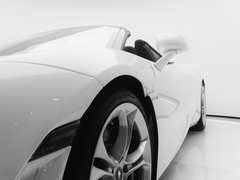 Central to the Roadster’s mystique, and the source of its most extraordinary claims, is the “SpaceX package.” Musk first tantalized the public with this concept in 2018, tweeting about “small rocket thrusters arranged seamlessly around car” that would “dramatically improve acceleration, top speed, braking & cornering.” The most audacious implication, however, was that “Maybe they will even allow a Tesla to fly…” In a recent appearance on the Joe Rogan Experience, Musk reiterated these ambitions, hinting at a product demonstration before the end of 2025 that might showcase the car’s ability to “fly.” He provocatively declared, “I think it has a shot at being the most memorable product unveil ever,” suggesting the car would surpass any fantastical vehicle from a James Bond film.
Let’s be clear: the idea of a production car genuinely flying, in the sense of sustained aerial locomotion like a small aircraft, remains firmly in the realm of science fiction, especially for a vehicle designed primarily for roads. The physics alone are staggering. For a car to achieve true flight, it requires enormous lift, propulsion for forward motion, and incredibly sophisticated control systems. More importantly, it would necessitate a complete overhaul of regulatory frameworks, requiring FAA certification for flight and a completely different safety paradigm. The energy density required for sustained flight from a battery pack would be immense, far exceeding even the most advanced 2025 EV battery technology.
What Musk is likely referring to, and what aligns with patented Tesla technologies, is a “cold gas thruster” system. This would involve replacing the rear seats with a composite overwrapped pressure vessel (COPV) filled with compressed gas, likely nitrogen. When activated, this pressurized gas would be released through multiple small thrusters strategically positioned around the vehicle. This system wouldn’t facilitate sustained flight but could offer a significant boost in performance. Imagine bursts of thrust for hyper-acceleration, akin to a drag racer’s nitrous oxide system but electrically powered. It could also potentially aid in braking by creating reverse thrust or even enhance cornering by vectoring thrust on the inside wheel.
The concept of “hovering” is also more plausible than sustained flight, but still incredibly challenging. A controlled hover, as demonstrated by early flying car prototypes like the Samson Switchblade or the Alef Model A, often involves ducted fans or vertical lift systems, not cold gas thrusters for a significant duration. While short, dramatic “hops” or a controlled, low-altitude float could make for an incredible demonstration – a technical marvel for a few seconds – the practical application for a road-going car is limited. Such a system would consume vast amounts of energy, add considerable weight and complexity, and introduce unprecedented safety and liability concerns for a street-legal vehicle. Regulatory bodies globally would undoubtedly balk at mass-produced cars capable of even rudimentary hovering without stringent new certifications.
From an engineering perspective, the “SpaceX package” represents a fascinating exploration of advanced propulsion systems and automotive engineering breakthroughs. But the leap from a captivating prototype demonstration to a safe, reliable, and commercially viable feature in a mass-produced luxury electric vehicle is gargantuan. Industry experts, including Telemetry’s Sam Abuelsamid, have consistently expressed skepticism, citing “way too many safety and liability issues.” While Elon Musk is certainly capable of creating an unforgettable demonstration, the likelihood of this “rocket-powered” system making it into production in a truly transformative capacity, beyond a novelty performance enhancer, remains exceedingly low.
The Hypercar Arena of 2025: Competition Heats Up
When the Roadster was first announced, its performance figures stood unchallenged. In 2025, however, the landscape of high-performance EVs has evolved dramatically. The Tesla Roadster is no longer entering an empty field; it’s stepping into a fiercely competitive arena populated by established luxury brands and agile newcomers pushing the boundaries of electric supercar investment.
Vehicles like the Rimac Nevera, a Croatian hypercar, have already achieved production status, boasting a staggering 1,914 horsepower and a verified 0-60 mph time of 1.74 seconds. The Lotus Evija delivers over 2,000 horsepower, and the Pininfarina Battista offers 1,900 hp with an Italian flourish. Lucid Air Sapphire, a four-door sedan, has proven that even more conventional body styles can achieve hypercar-level acceleration, reaching 60 mph in under 1.89 seconds. These competitors are not only delivering incredible performance but are also refining the entire luxury EV experience, from exquisite interiors to advanced driver-assistance systems and robust charging networks.
The Roadster, therefore, must offer more than just raw speed. It needs to provide a unique, compelling value proposition that justifies its perennial delay and high price point. The “SpaceX package” could be that differentiator, even if its capabilities are primarily for show rather than practical “flight.” The brand cachet of Tesla and the direct association with SpaceX’s pioneering spirit in space exploration provide a powerful narrative. This association elevates the Roadster beyond mere transportation; it positions it as a piece of future technology, a collectible, and a symbol of innovation. However, for a vehicle projected to cost upwards of $200,000, mere novelty isn’t enough; buyers in this segment demand uncompromising quality, reliability, and an ownership experience that matches the vehicle’s cutting-edge EV design.
Tesla’s Shifting Priorities and Production Bottlenecks
The delays surrounding the Roadster are not isolated incidents. Tesla has a track record of ambitious product announcements followed by extended timelines, a pattern seen with the Cybertruck, the Semi, and the ongoing development of its Full Self-Driving (FSD) capabilities. In 2025, Tesla’s primary focus remains on scaling production of its volume models (Model 3/Y), ramping up Cybertruck deliveries, and crucially, accelerating its robotaxi initiative. The latter represents a potentially transformative revenue stream and a core component of Musk’s long-term vision for autonomous driving.
Central to the Roadster’s mystique, and the source of its most extraordinary claims, is the “SpaceX package.” Musk first tantalized the public with this concept in 2018, tweeting about “small rocket thrusters arranged seamlessly around car” that would “dramatically improve acceleration, top speed, braking & cornering.” The most audacious implication, however, was that “Maybe they will even allow a Tesla to fly…” In a recent appearance on the Joe Rogan Experience, Musk reiterated these ambitions, hinting at a product demonstration before the end of 2025 that might showcase the car’s ability to “fly.” He provocatively declared, “I think it has a shot at being the most memorable product unveil ever,” suggesting the car would surpass any fantastical vehicle from a James Bond film.
Let’s be clear: the idea of a production car genuinely flying, in the sense of sustained aerial locomotion like a small aircraft, remains firmly in the realm of science fiction, especially for a vehicle designed primarily for roads. The physics alone are staggering. For a car to achieve true flight, it requires enormous lift, propulsion for forward motion, and incredibly sophisticated control systems. More importantly, it would necessitate a complete overhaul of regulatory frameworks, requiring FAA certification for flight and a completely different safety paradigm. The energy density required for sustained flight from a battery pack would be immense, far exceeding even the most advanced 2025 EV battery technology.
What Musk is likely referring to, and what aligns with patented Tesla technologies, is a “cold gas thruster” system. This would involve replacing the rear seats with a composite overwrapped pressure vessel (COPV) filled with compressed gas, likely nitrogen. When activated, this pressurized gas would be released through multiple small thrusters strategically positioned around the vehicle. This system wouldn’t facilitate sustained flight but could offer a significant boost in performance. Imagine bursts of thrust for hyper-acceleration, akin to a drag racer’s nitrous oxide system but electrically powered. It could also potentially aid in braking by creating reverse thrust or even enhance cornering by vectoring thrust on the inside wheel.
The concept of “hovering” is also more plausible than sustained flight, but still incredibly challenging. A controlled hover, as demonstrated by early flying car prototypes like the Samson Switchblade or the Alef Model A, often involves ducted fans or vertical lift systems, not cold gas thrusters for a significant duration. While short, dramatic “hops” or a controlled, low-altitude float could make for an incredible demonstration – a technical marvel for a few seconds – the practical application for a road-going car is limited. Such a system would consume vast amounts of energy, add considerable weight and complexity, and introduce unprecedented safety and liability concerns for a street-legal vehicle. Regulatory bodies globally would undoubtedly balk at mass-produced cars capable of even rudimentary hovering without stringent new certifications.
From an engineering perspective, the “SpaceX package” represents a fascinating exploration of advanced propulsion systems and automotive engineering breakthroughs. But the leap from a captivating prototype demonstration to a safe, reliable, and commercially viable feature in a mass-produced luxury electric vehicle is gargantuan. Industry experts, including Telemetry’s Sam Abuelsamid, have consistently expressed skepticism, citing “way too many safety and liability issues.” While Elon Musk is certainly capable of creating an unforgettable demonstration, the likelihood of this “rocket-powered” system making it into production in a truly transformative capacity, beyond a novelty performance enhancer, remains exceedingly low.
The Hypercar Arena of 2025: Competition Heats Up
When the Roadster was first announced, its performance figures stood unchallenged. In 2025, however, the landscape of high-performance EVs has evolved dramatically. The Tesla Roadster is no longer entering an empty field; it’s stepping into a fiercely competitive arena populated by established luxury brands and agile newcomers pushing the boundaries of electric supercar investment.
Vehicles like the Rimac Nevera, a Croatian hypercar, have already achieved production status, boasting a staggering 1,914 horsepower and a verified 0-60 mph time of 1.74 seconds. The Lotus Evija delivers over 2,000 horsepower, and the Pininfarina Battista offers 1,900 hp with an Italian flourish. Lucid Air Sapphire, a four-door sedan, has proven that even more conventional body styles can achieve hypercar-level acceleration, reaching 60 mph in under 1.89 seconds. These competitors are not only delivering incredible performance but are also refining the entire luxury EV experience, from exquisite interiors to advanced driver-assistance systems and robust charging networks.
The Roadster, therefore, must offer more than just raw speed. It needs to provide a unique, compelling value proposition that justifies its perennial delay and high price point. The “SpaceX package” could be that differentiator, even if its capabilities are primarily for show rather than practical “flight.” The brand cachet of Tesla and the direct association with SpaceX’s pioneering spirit in space exploration provide a powerful narrative. This association elevates the Roadster beyond mere transportation; it positions it as a piece of future technology, a collectible, and a symbol of innovation. However, for a vehicle projected to cost upwards of $200,000, mere novelty isn’t enough; buyers in this segment demand uncompromising quality, reliability, and an ownership experience that matches the vehicle’s cutting-edge EV design.
Tesla’s Shifting Priorities and Production Bottlenecks
The delays surrounding the Roadster are not isolated incidents. Tesla has a track record of ambitious product announcements followed by extended timelines, a pattern seen with the Cybertruck, the Semi, and the ongoing development of its Full Self-Driving (FSD) capabilities. In 2025, Tesla’s primary focus remains on scaling production of its volume models (Model 3/Y), ramping up Cybertruck deliveries, and crucially, accelerating its robotaxi initiative. The latter represents a potentially transformative revenue stream and a core component of Musk’s long-term vision for autonomous driving.
 Developing a niche, low-volume hypercar like the Roadster demands significant engineering resources, capital investment, and dedicated production lines. In 2024, the departure of David Zhang, who reportedly headed the Roadster program, further fueled speculation about its fate. While high-performance EVs are critical for brand image and demonstrating technological prowess, they often take a backseat to projects with higher commercial viability and broader market impact within a large automotive corporation.
The Roadster’s repeated postponements (2020, 2023, 2024, 2025, and now hinted at 2026 by Musk himself, albeit with a jocular “April Fool’s” disclaimer) underscore the intricate challenges of bringing such an ambitious project to fruition amidst other corporate priorities. Tesla’s resource allocation strategy appears to prioritize projects that can scale quickly and generate substantial revenue, or those that are foundational to its AI and autonomous driving ambitions. The Roadster, while a powerful halo car, fits neither of these categories perfectly.
The Unveiling: What to Expect from the 2025 Demo
Musk’s promise of a 2025 product demonstration is the current beacon of hope for Roadster enthusiasts. If it happens, what could it realistically entail? I anticipate a highly controlled, meticulously choreographed event designed for maximum spectacle and impact.
We might see a demonstration of the cold gas thrusters providing an astonishing acceleration boost, potentially pushing the 0-60 mph time towards or even below the fabled one-second mark. This alone would be a monumental achievement in electric vehicle performance metrics and a testament to advanced propulsion systems. A short, controlled “hover” or a series of impressive low-altitude jumps could be showcased, proving the conceptual capability of the thruster system to lift the vehicle. This would undoubtedly be visually stunning and a viral marketing coup, fulfilling the “most memorable product unveil ever” prophecy on a theatrical level.
However, it is crucial to distinguish between a concept demonstration and a production-ready feature. Such a demo would highlight Tesla’s unparalleled ability for automotive R&D trends and its engineering prowess, but it won’t signal the immediate availability of a road-legal, “flying” Roadster that buyers can take home. The regulatory, safety, and economic hurdles for integrating such a system into a consumer vehicle are simply too high for the immediate future. The demo would serve as a powerful marketing tool, reinforcing Tesla’s image as an innovator and a leader in sustainable transportation innovation, while keeping the Roadster dream alive and potentially reigniting interest among potential buyers and investors.
The Lingering Question: Product or Perpetual Promise?
The Tesla Roadster, as it stands in 2025, embodies a fascinating intersection of technological ambition, marketing genius, and the harsh realities of automotive production. Is it a genuine product destined to revolutionize the luxury electric vehicle market, or is it a perpetual promise, a concept designed to maintain Tesla’s aura of invincibility and innovation while perpetually just out of reach?
My decade of experience in this field suggests it’s a bit of both. The engineering challenges are immense, and the market has moved forward, presenting new competitors. Yet, Musk’s vision often materializes, albeit on its own unpredictable timeline. The Roadster, even if it arrives sans genuine flight capabilities, will undoubtedly be a breathtaking performer, setting new benchmarks for zero-emission performance. Its potential to accelerate faster than many fighter jets, to offer a truly extreme driving experience, and to carry the Tesla/SpaceX mystique will make it a highly desirable, if exceptionally exclusive, machine.
The ultimate value of the Roadster might not solely be in its sales figures, but in its ability to inspire, to push the boundaries of what consumers expect from premium EV market offerings, and to serve as a powerful halo for the entire Tesla brand. It keeps the conversation about cutting-edge EV design and the future of automotive technology firmly centered on Tesla.
The long wait has tested the patience of many, but the tantalizing possibility of a genuine automotive marvel, however delayed, continues to fuel anticipation. As we move deeper into 2025, the automotive world, and particularly those of us obsessed with the bleeding edge of EV development, will be watching closely for that promised demonstration. Will it finally be the moment the Roadster transitions from dream to tangible (if not airborne) reality?
Developing a niche, low-volume hypercar like the Roadster demands significant engineering resources, capital investment, and dedicated production lines. In 2024, the departure of David Zhang, who reportedly headed the Roadster program, further fueled speculation about its fate. While high-performance EVs are critical for brand image and demonstrating technological prowess, they often take a backseat to projects with higher commercial viability and broader market impact within a large automotive corporation.
The Roadster’s repeated postponements (2020, 2023, 2024, 2025, and now hinted at 2026 by Musk himself, albeit with a jocular “April Fool’s” disclaimer) underscore the intricate challenges of bringing such an ambitious project to fruition amidst other corporate priorities. Tesla’s resource allocation strategy appears to prioritize projects that can scale quickly and generate substantial revenue, or those that are foundational to its AI and autonomous driving ambitions. The Roadster, while a powerful halo car, fits neither of these categories perfectly.
The Unveiling: What to Expect from the 2025 Demo
Musk’s promise of a 2025 product demonstration is the current beacon of hope for Roadster enthusiasts. If it happens, what could it realistically entail? I anticipate a highly controlled, meticulously choreographed event designed for maximum spectacle and impact.
We might see a demonstration of the cold gas thrusters providing an astonishing acceleration boost, potentially pushing the 0-60 mph time towards or even below the fabled one-second mark. This alone would be a monumental achievement in electric vehicle performance metrics and a testament to advanced propulsion systems. A short, controlled “hover” or a series of impressive low-altitude jumps could be showcased, proving the conceptual capability of the thruster system to lift the vehicle. This would undoubtedly be visually stunning and a viral marketing coup, fulfilling the “most memorable product unveil ever” prophecy on a theatrical level.
However, it is crucial to distinguish between a concept demonstration and a production-ready feature. Such a demo would highlight Tesla’s unparalleled ability for automotive R&D trends and its engineering prowess, but it won’t signal the immediate availability of a road-legal, “flying” Roadster that buyers can take home. The regulatory, safety, and economic hurdles for integrating such a system into a consumer vehicle are simply too high for the immediate future. The demo would serve as a powerful marketing tool, reinforcing Tesla’s image as an innovator and a leader in sustainable transportation innovation, while keeping the Roadster dream alive and potentially reigniting interest among potential buyers and investors.
The Lingering Question: Product or Perpetual Promise?
The Tesla Roadster, as it stands in 2025, embodies a fascinating intersection of technological ambition, marketing genius, and the harsh realities of automotive production. Is it a genuine product destined to revolutionize the luxury electric vehicle market, or is it a perpetual promise, a concept designed to maintain Tesla’s aura of invincibility and innovation while perpetually just out of reach?
My decade of experience in this field suggests it’s a bit of both. The engineering challenges are immense, and the market has moved forward, presenting new competitors. Yet, Musk’s vision often materializes, albeit on its own unpredictable timeline. The Roadster, even if it arrives sans genuine flight capabilities, will undoubtedly be a breathtaking performer, setting new benchmarks for zero-emission performance. Its potential to accelerate faster than many fighter jets, to offer a truly extreme driving experience, and to carry the Tesla/SpaceX mystique will make it a highly desirable, if exceptionally exclusive, machine.
The ultimate value of the Roadster might not solely be in its sales figures, but in its ability to inspire, to push the boundaries of what consumers expect from premium EV market offerings, and to serve as a powerful halo for the entire Tesla brand. It keeps the conversation about cutting-edge EV design and the future of automotive technology firmly centered on Tesla.
The long wait has tested the patience of many, but the tantalizing possibility of a genuine automotive marvel, however delayed, continues to fuel anticipation. As we move deeper into 2025, the automotive world, and particularly those of us obsessed with the bleeding edge of EV development, will be watching closely for that promised demonstration. Will it finally be the moment the Roadster transitions from dream to tangible (if not airborne) reality?
 The evolution of the electric vehicle market is accelerating at an unprecedented pace. To truly grasp the future of high-performance luxury EVs, understanding the nuances of projects like the Tesla Roadster is crucial. If you’re passionate about the cutting edge of automotive technology, I invite you to delve deeper into the burgeoning world of luxury electric vehicles and the remarkable innovations shaping our driving future. Explore the next generation of electric supercars that are already rewriting the rules of performance and sustainability.